Your Grandfather's Road Trip Was a Two-Week Ordeal. Yours Is a Long Weekend.
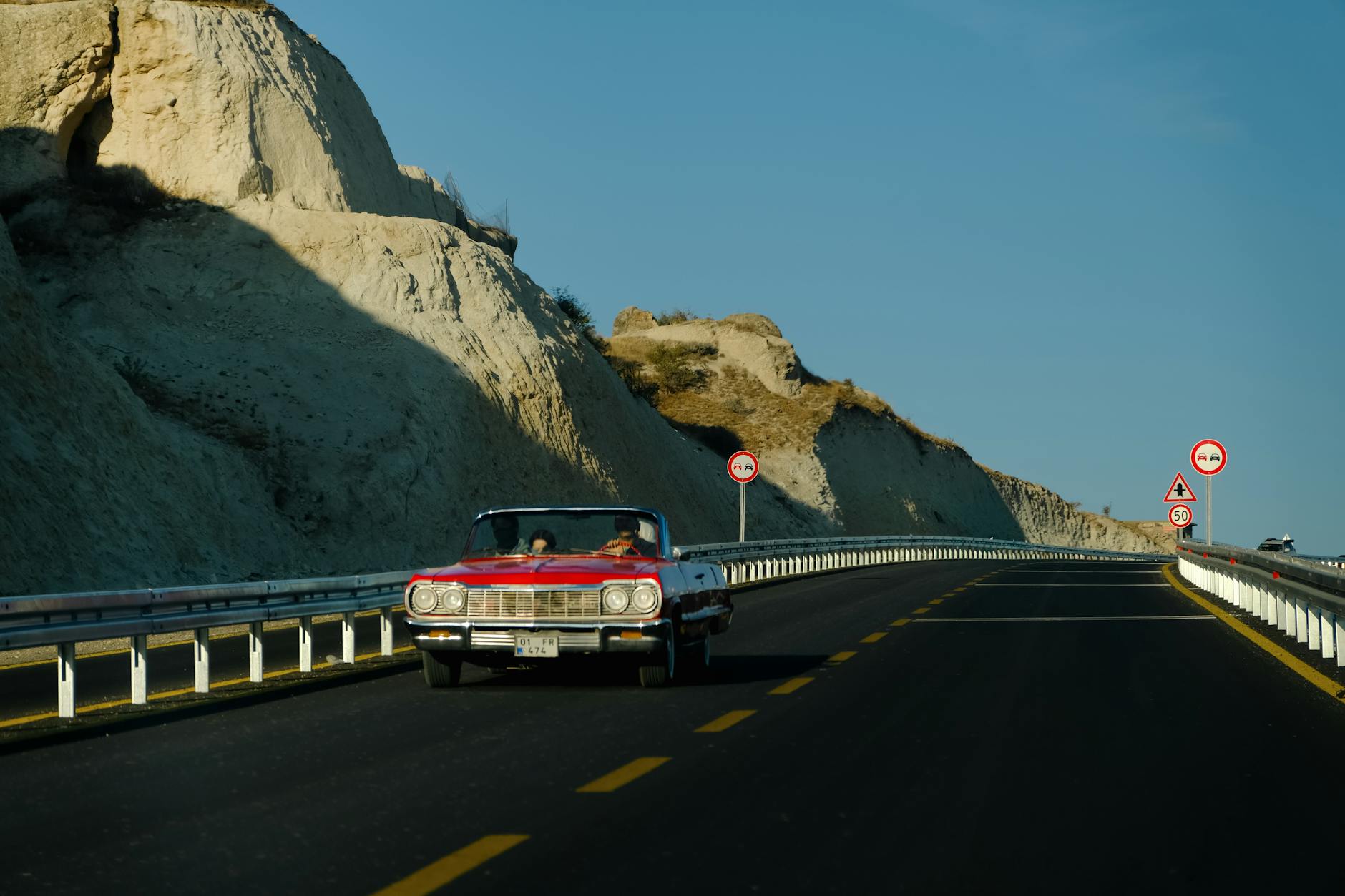
Your Grandfather's Road Trip Was a Two-Week Ordeal. Yours Is a Long Weekend.
Picture this: you've just loaded up a 1952 Chevrolet Styleline, tossed a paper map across the bench seat, and pointed the hood west out of Manhattan. No GPS. No cruise control. No guarantee the road ahead is even paved. You're hoping to reach Los Angeles — roughly 2,800 miles away — and if everything goes well, you might make it in about two weeks.
Today, a motivated driver with a full tank and a good playlist can cover that same distance in around 40 hours of actual driving time. Spread that across three or four days and you've got yourself a road trip. So what exactly happened between then and now? Quite a lot, it turns out.
Before the Interstate, There Was Chaos
The Federal Aid Highway Act of 1956 is one of the most consequential pieces of legislation most Americans have never thought much about. Before President Eisenhower signed it into law, cross-country driving meant stitching together a patchwork of state and county roads — some paved, some gravel, some little more than packed dirt that turned to mud after rain.
Route 66, the famous "Mother Road" that ran from Chicago to Santa Monica, was actually considered a good option. And even that legendary highway had long stretches through Oklahoma, Texas, and New Mexico where pavement gave way to something considerably less reliable. Drivers in the early 1950s were advised to carry spare tires — plural — along with extra fan belts, a hand pump, and enough water for both themselves and their radiators.
Average driving speeds across the country hovered around 35 to 45 miles per hour, not because drivers were cautious by nature, but because the roads simply didn't allow for more. Sharp curves, narrow bridges, small-town speed limits, and the constant threat of a blowout kept everyone honest.
The Roadside Diner Wasn't Charming — It Was Essential
There's a certain nostalgia attached to old roadside diners, and sure, the pie was probably good. But those stops weren't optional pit stops for atmosphere. They were lifelines.
In the pre-interstate era, fuel stations were sparse outside major towns. Running dry in the New Mexico desert or the Utah flats wasn't a minor inconvenience — it was a genuine emergency. Travelers planned their routes around known fuel stops, sometimes detouring 20 or 30 miles off course just to fill up. The same went for food and lodging. Motels existed, but they were inconsistent in quality and availability. Many travelers carried camping gear as a backup plan, not as a lifestyle choice.
And if your car broke down — which it did, regularly, in an era when reliability engineering was still finding its feet — you were at the mercy of whoever happened to drive past and whatever the nearest town's mechanic knew how to fix.
What the Interstates Actually Changed
When the Interstate Highway System started coming online through the late 1950s and into the 1960s, the transformation wasn't just about speed. It was about predictability. Suddenly, a driver could expect consistent road surfaces, standardized signage, predictable on-ramps and exits, and — eventually — a reliable network of gas stations and rest stops spaced at manageable intervals.
The psychological shift was just as significant as the physical one. Cross-country travel stopped being an expedition and started becoming a trip. Average highway speeds climbed toward 65 and 70 miles per hour. Journey times that once measured in weeks compressed into days. Families that had never considered driving across the country began doing exactly that.
By the 1970s and 80s, the road trip had transformed from a logistical challenge into a cultural institution — summer vacations, college move-ins, post-breakup drives west. The open road became romantic precisely because it had stopped being dangerous.
The Modern Drive: Almost Frictionless
Do the same New York to LA trip today and the contrast is almost surreal. Google Maps or Waze will route you in real time, rerouting around traffic before you even know the backup exists. Your car's fuel range is displayed to the mile. Rest stops appear every 50 to 100 miles on major interstates. If you're in an EV, the charging network — still imperfect, admittedly — is improving fast enough that cross-country electric road trips are now genuinely viable.
Drive-throughs, 24-hour truck stops, and interstate chains have replaced the necessity of planning around small-town diners. You can cover 600 miles in a day without it feeling heroic. Modern vehicles with lane assist, adaptive cruise control, and driver fatigue alerts have made long-haul driving safer than it has ever been.
The average cross-country drive today takes roughly 40 to 45 hours of total driving time. Most people do it in three to five days, stopping for comfort rather than survival.
What Got Lost Along the Way
Here's the thing, though. Ask anyone who drove Route 66 in its prime and they'll tell you something that GPS coordinates can't capture: the trip meant something different when it demanded something from you.
The slowness forced you to actually see the country — the landscape shifting from the Appalachians to the plains to the desert in real time, not as a blur outside a sealed window at 80 mph. The stops weren't interruptions; they were the trip. The strangers you met at a diner in Amarillo or a motor court in Flagstaff were part of the experience in a way that a Marriott off an interstate exit simply isn't.
Progress is real, and the convenience of modern road travel is genuinely remarkable. But it's worth pausing to recognize what the friction used to give us — a reason to slow down and actually be somewhere, rather than just passing through it.