The Walking Encyclopedia Behind the Counter
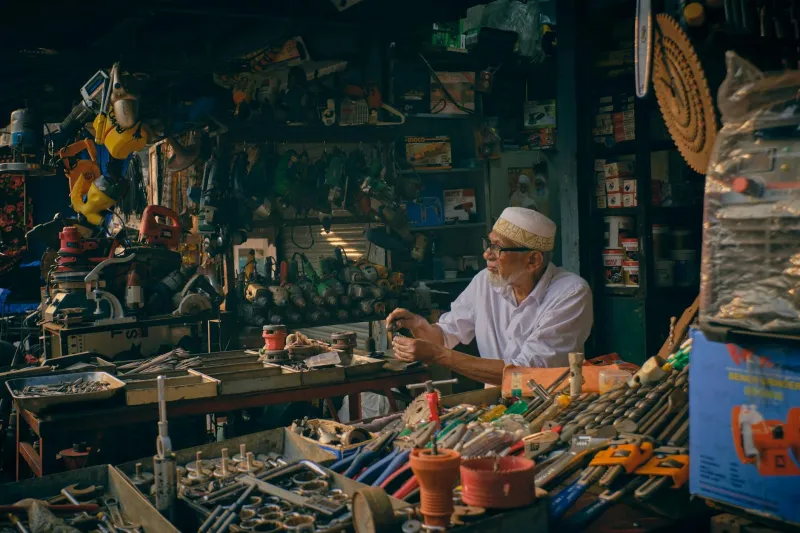
When Frank Kowalski's kitchen faucet started that mysterious drip-drip-drip at 2 AM on a Tuesday in 1978, he didn't reach for his phone to start Googling. He waited until morning, walked three blocks to Murphy's Hardware, and approached the counter where Ed Murphy stood sorting screws into tiny compartments.
"Kitchen faucet's dripping," Frank announced.
Ed looked up, wiped his hands on his apron, and asked exactly three questions: "How old's the house? Single handle or double? Dripping from the spout or around the base?"
Within two minutes, Ed had diagnosed the problem (worn O-ring), retrieved the correct replacement part from the wall of tiny drawers behind him, and explained the fifteen-minute repair process while sketching a simple diagram on the back of Frank's receipt. Total cost: $1.47. Total time in store: four minutes.
This wasn't exceptional customer service—this was Tuesday morning at every neighborhood hardware store in America.
The Neighborhood Knowledge Hub
Murphy's Hardware occupied the same corner building for thirty-seven years, serving a five-square-mile radius of post-war suburban homes. Ed Murphy knew every house in his territory: which ones had the tricky plumbing installed by that contractor who cut corners in 1963, which developments used the cheap electrical fixtures that failed after exactly twelve years, and which streets still had the original windows that required a specific type of glazing compound you couldn't find anywhere else.
This geographical knowledge created something remarkable: hyper-local expertise that anticipated problems before customers even knew they had them. When the Peterson family moved into the old Williams place, Ed would casually mention that they'd probably need to replace the garbage disposal within six months—and he'd be right.
Ed's knowledge wasn't theoretical. He'd spent forty years fixing things, building things, and helping neighbors solve the practical problems of homeownership. He understood not just what parts fit together, but why they failed, how to prevent future problems, and which shortcuts actually worked versus which ones would create bigger headaches down the road.
The Diagnostic Conversation
When customers entered Murphy's Hardware with a problem, they participated in a diagnostic conversation that resembled a medical consultation. Ed would listen to descriptions of symptoms, ask clarifying questions, and often request to see the broken part itself. This hands-on assessment process caught details that even the most comprehensive online tutorial couldn't address.
"Bring in the old part," Ed would say. "I need to see what we're dealing with."
This simple request prevented countless mismatched purchases and frustrated return trips. Ed could spot the difference between parts that looked identical but functioned differently, identify when a problem required a different solution than the customer expected, and suggest preventive measures that would avoid future repairs.
The relationship between customer and hardware store owner created natural quality control, too. If Ed recommended a product that failed prematurely or a solution that didn't work, customers would return—not just to complain, but to work together on finding a better approach. This accountability loop ensured that advice was genuinely helpful rather than just profitable.
The Apprenticeship of Practical Knowledge
Regular customers at places like Murphy's Hardware received an informal education in practical problem-solving. Over years of small repairs and home improvement projects, they absorbed not just specific solutions but general principles: how to identify load-bearing walls, why certain materials worked better in humid environments, and which tools were worth investing in versus which ones could be borrowed or bought cheaply.
This knowledge transfer happened naturally through repeated interactions. Ed might show a customer how to properly use a pipe wrench while explaining why overtightening could crack the fitting. These mini-lessons accumulated over time, creating more capable and confident homeowners who could tackle increasingly complex projects.
The hardware store also served as an informal meeting place where customers shared their own experiences and solutions. While waiting for Ed to locate a specific bolt, neighbors would discuss their recent projects, recommend reliable contractors, and warn each other about common mistakes. This community knowledge-sharing created redundant expertise throughout the neighborhood.
The Big Box Disruption
The arrival of Home Depot and Lowe's in the 1980s and 1990s promised better selection, lower prices, and more convenient hours. These warehouse-style stores delivered on those promises, offering thousands of products that small hardware stores couldn't afford to stock, often at prices that neighborhood stores couldn't match.
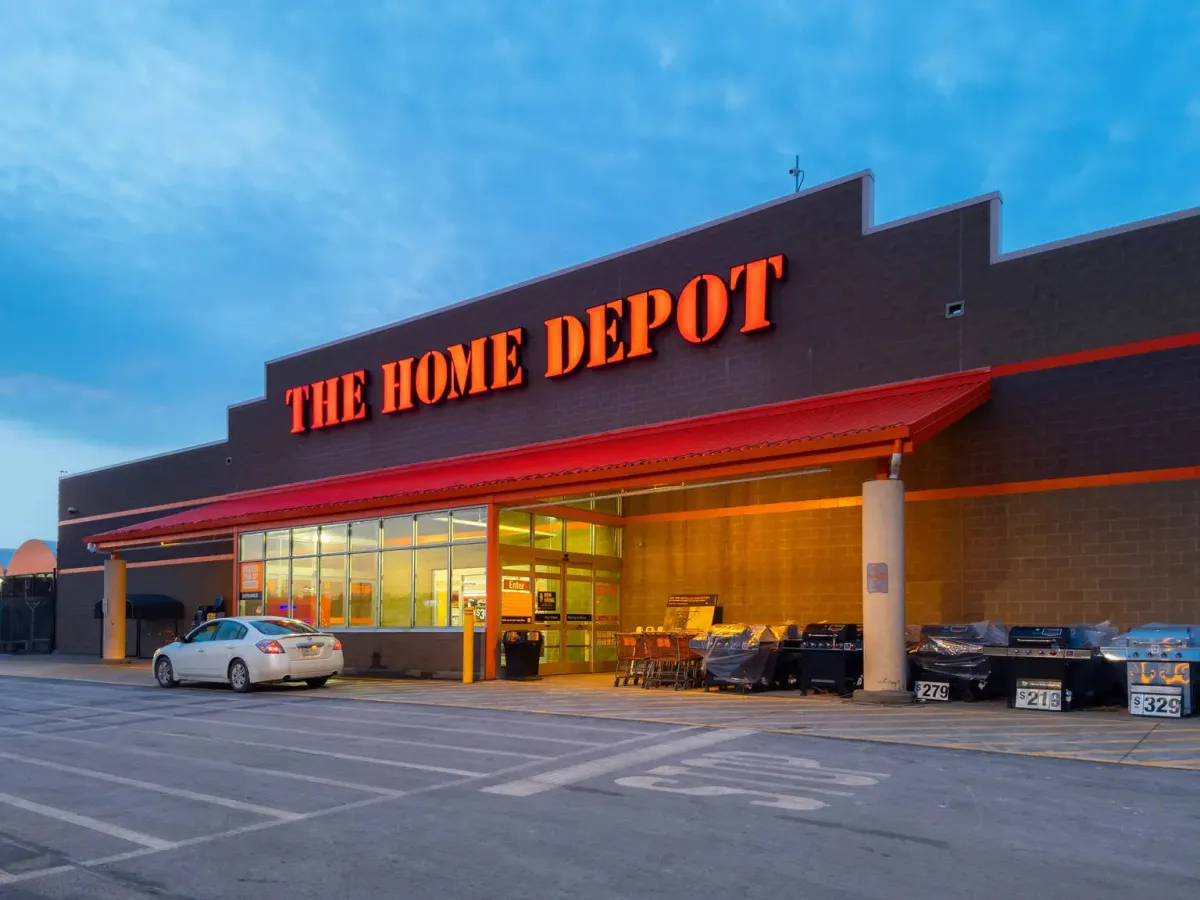 Photo: Home Depot, via wallpapers.com
But the big box model sacrificed the personal expertise that made places like Murphy's Hardware so valuable. Store employees, often part-time workers with minimal training, couldn't provide the diagnostic conversations and local knowledge that solved problems efficiently. The trade-off was clear: lower prices and bigger selection in exchange for figuring things out yourself.
This shift coincided with the rise of do-it-yourself culture and home improvement television shows that made complex projects seem accessible to weekend warriors. The combination of big box stores and DIY media created the illusion that homeowners could easily replace the expertise that neighborhood hardware stores had provided.
The YouTube University Era
Today's home repair process looks completely different. That mysterious faucet drip now triggers a research expedition across multiple platforms: YouTube videos with conflicting advice, Amazon reviews from customers who may or may not have similar problems, and home improvement forums where anonymous users debate solutions with varying levels of expertise.
This democratization of information has genuine benefits. Homeowners can access detailed visual instructions for complex projects, learn from professionals who share their knowledge online, and find solutions for problems too obscure for any single hardware store owner to have encountered. The collective wisdom of the internet often exceeds what any individual expert could provide.
Modern DIY resources also empower people who were previously excluded from home repair culture. YouTube tutorials don't assume prior knowledge or use intimidating technical jargon. They show rather than just tell, making complex processes accessible to visual learners who might have struggled with verbal explanations.
The Hidden Costs of Self-Service Expertise
Yet this shift from personal expertise to self-service research has created unexpected problems. The abundance of conflicting information often leads to analysis paralysis—customers spend more time researching solutions than Ed Murphy would have needed to fix the original problem. The lack of quality control means bad advice spreads as easily as good advice, leading to expensive mistakes and dangerous shortcuts.
The big box store experience frequently involves multiple trips: one to identify the problem and buy what you think you need, another to return the wrong parts and get different ones, and sometimes a third to buy additional tools or materials the original research didn't mention. What Ed Murphy could have solved in one four-minute interaction now requires hours of research and multiple store visits.
The financial impact extends beyond time and frustration. Without expert guidance, homeowners often over-buy materials, choose inappropriate solutions, or create bigger problems that require professional intervention. The $1.47 O-ring that Ed would have recommended might become a $300 plumber's visit when the DIY repair goes wrong.
The Loneliness of Modern Problem-Solving
Perhaps most significantly, we've lost the social aspect of practical problem-solving. The hardware store counter was a place where neighbors connected, shared knowledge, and built the relationships that made communities more resilient. The modern home improvement experience is largely solitary—individuals researching solutions alone, shopping in anonymous big box stores, and troubleshooting problems without the safety net of local expertise.
This isolation has broader implications for community resilience and practical knowledge transfer. Skills that were once passed naturally from experienced neighbors to newcomers now disappear when people move or retire. The collective practical wisdom that made neighborhoods more self-sufficient has been replaced by individual dependence on digital resources that may or may not be reliable.
We've gained access to unlimited information but lost access to wisdom—the practical judgment that comes from years of experience solving real problems for real people. Ed Murphy couldn't Google the answer to every question, but he didn't need to. He carried decades of hands-on knowledge that no algorithm can replicate, delivered with the personal accountability that made his advice genuinely trustworthy.
The corner hardware store represented more than retail convenience—it was a institution that made neighborhoods more capable, connected, and self-reliant. In our rush toward efficiency and choice, we've traded the four-minute solution for the four-hour research project, and we're all a little more alone with our leaky faucets because of it.