Help Wanted: When Getting Hired Meant Looking Someone in the Eye
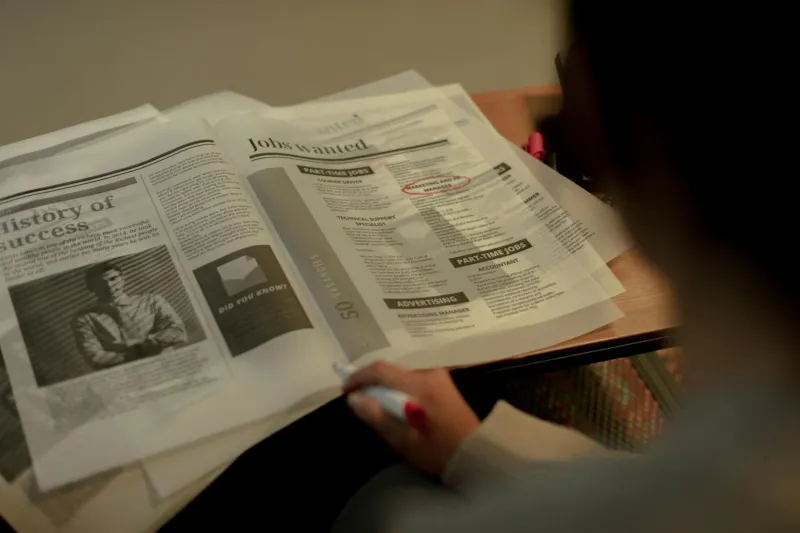
The Sunday Paper Job Hunt
Every Sunday morning through the 1980s, millions of Americans performed the same ritual: spreading the newspaper across their kitchen table and hunting through pages of tiny classified ads. "ACCOUNTANT WANTED - Downtown firm seeks detail-oriented professional. Good benefits. Apply in person Monday 9-5." Twenty-three words that could change someone's entire life.
The classified section was America's job market, compressed into columns of abbreviated hope. "Exp. req'd." meant experienced required. "Gd. sal." promised good salary. "Apply in person" meant exactly that — show up, introduce yourself, and make your case face-to-face. No online applications. No algorithmic screening. No black hole of digital submission.
Job seekers would circle promising ads with red pen, plan their week around application schedules, and prepare for a fundamentally human process. Getting hired meant convincing another person, not a computer program, that you deserved a chance.
The Art of Showing Up
Applying for jobs required genuine strategy. You dressed professionally on a Tuesday morning and made the rounds — insurance company at 9 AM, accounting firm at 10:30, bank at 2 PM. Each stop meant walking into a real office, asking to speak with someone about employment, and hoping they'd take five minutes to hear your pitch.
Receptionists held enormous power in this system. They decided whether you looked serious enough to interrupt their boss. A friendly smile and polite persistence could get you past the gatekeeper. Rudeness or poor presentation meant immediate rejection, no second chances.
Many jobs were filled through word-of-mouth before they ever reached the classified ads. "My brother-in-law's company is hiring" carried more weight than any resume. Neighborhood networks, church connections, and family friends created invisible job markets that operated entirely on personal relationships. Getting hired often meant knowing someone who knew someone who needed someone.
The Five-Minute Interview That Decided Everything
Job interviews in the pre-digital era were refreshingly direct. Hiring managers made quick decisions based on immediate impressions. Can this person communicate clearly? Do they seem reliable? Will they fit with our team? These questions were answered in real-time conversation, not through personality assessments and skills tests.
Many successful careers began with impromptu interviews. "We're actually looking for someone right now. Can you start Monday?" Hiring decisions happened at human speed, not bureaucratic pace. Small businesses especially operated on gut instinct — if the owner liked you and thought you could do the job, you were hired.
The process favored confidence and communication skills over credentials. A high school graduate with good people skills could talk their way into opportunities that today would require a college degree and three years of experience. The barrier to entry was lower, but the human element was higher.
The Digital Revolution That Changed Everything
The internet promised to democratize job searching by giving everyone access to more opportunities. Instead, it created a system where applying for jobs became easier but getting hired became harder. Online job boards flooded employers with hundreds of applications for every position, making individual candidates invisible in the digital crowd.
Applicant Tracking Systems (ATS) now screen resumes before humans ever see them. These algorithms scan for keywords, education requirements, and experience levels, automatically rejecting candidates who don't match exact criteria. A qualified person with slightly different job titles or a resume that doesn't format correctly can be eliminated without human consideration.
LinkedIn transformed professional networking from organic relationship-building into algorithmic connection-collecting. "Building your network" became a digital performance rather than genuine community involvement. The platform's job matching systems promise personalized opportunities but often deliver generic postings that hundreds of others are simultaneously viewing.
The Modern Application Void
Today's job seekers submit applications into what feels like a digital black hole. Upload your resume, fill out redundant forms that ask for information already on your resume, answer screening questions, and wait for an automated response that may never come. The average job posting receives 250 applications. Most applicants never hear anything back.
The process has become dehumanized on both sides. Recruiters scroll through hundreds of nearly identical profiles, looking for reasons to eliminate candidates rather than reasons to include them. Job seekers optimize their resumes for algorithm scanning rather than human reading, stuffing keywords and formatting for robots rather than people.
Video interviews conducted through computer screens have replaced the energy and intuition of in-person meetings. Technical glitches, awkward delays, and screen fatigue create barriers to genuine connection. The spontaneous chemistry that once sparked hiring decisions gets lost in digital translation.
What We Lost in Translation
The old system, for all its inefficiencies, was fundamentally about human judgment. Hiring managers trusted their instincts about people. They could spot potential in unexpected places and give chances to candidates who didn't fit perfect profiles. Many successful careers began with someone taking a risk on an unproven person who impressed them in a brief conversation.
Local job markets created accountability. If you hired someone who didn't work out, word spread quickly through professional networks. If you were known as a good employer who treated people fairly, talented candidates sought you out. Reputation mattered more than recruitment metrics.
The personal touch extended beyond hiring into workplace culture. Employees who were hired through human connections felt more invested in their roles. They understood they represented not just themselves but the people who vouched for them. This created stronger workplace relationships and lower turnover.
The Human Element We're Trying to Recover
Some companies are recognizing the limitations of purely algorithmic hiring and returning to more human-centered approaches. They're hosting job fairs, conducting working interviews, and prioritizing cultural fit over perfect credentials. These employers understand that great employees aren't always great on paper.
The most successful modern hiring often combines digital efficiency with human insight. Technology handles initial screening and scheduling, but final decisions still depend on personal interaction. The best recruiters use data to inform their judgment, not replace it.
The job market's evolution from classified ads to LinkedIn reflects broader changes in how Americans connect and evaluate each other. We've gained efficiency and expanded access, but we've lost something essential about the human process of sizing each other up and taking chances on potential rather than just proven performance.
That Sunday morning ritual of circling classified ads wasn't just job hunting — it was a weekly reminder that your next opportunity might be hiding in twenty-three carefully chosen words, waiting for someone brave enough to show up and make their case in person.