How a Doctor Figured Out What Was Wrong With You in 1955 — And Why That Process Is Almost Unrecognizable Today
How a Doctor Figured Out What Was Wrong With You in 1955 — And Why That Process Is Almost Unrecognizable Today
Imagine you're a 52-year-old man in Cleveland in 1955. You've been having chest pain for a few days — a dull pressure, some shortness of breath. You mention it to your wife. She says you should see the doctor. You call his office, and he fits you in that afternoon.
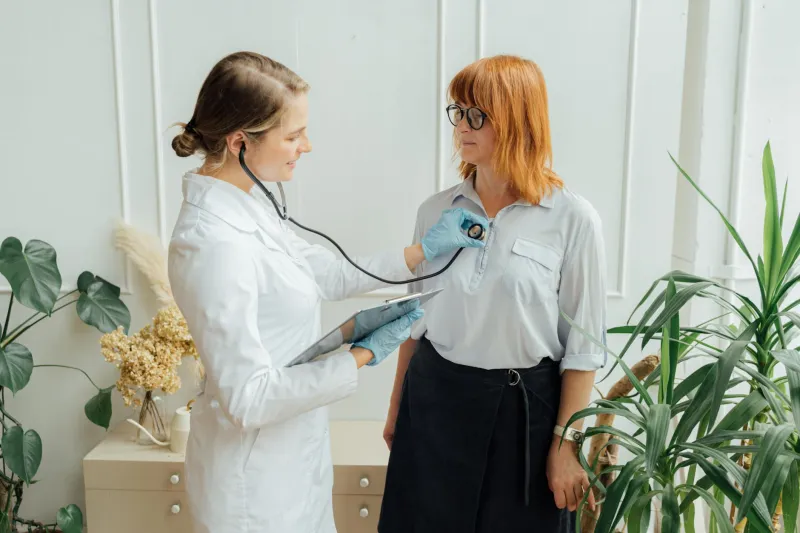
The doctor listens to your heart with a stethoscope. He takes your blood pressure with a manual cuff. He asks you questions about where the pain is, when it started, whether it moves to your arm. He looks at your color, listens to your breathing. Then he makes a judgment call based on experience, intuition, and whatever physical signs he can gather with his hands and ears.
If he thinks it might be a heart attack, he sends you to the hospital. There, a physician might order an electrocardiogram — one of the few diagnostic tools available at the time. Blood tests existed, but were limited. Imaging was primitive. The diagnosis was, to a significant degree, a well-educated guess.
Now consider what happens to that same 52-year-old man today.
The Information Gap That Used to Define Medicine
For most of American medical history, the gap between what a patient's body knew and what a doctor could actually detect was enormous. Symptoms were the primary data. The physical exam was the primary tool. And the physician's experience and pattern recognition were what bridged everything else.
This wasn't incompetence. These were often brilliant, dedicated people working at the absolute frontier of what was knowable. But the frontier was narrow. A tumor could grow for years before producing symptoms detectable enough to act on. A blockage could be slowly starving a heart of oxygen while showing nothing obvious from the outside. The body was, in many ways, a closed system.
The tools available to a general practitioner in 1955 weren't dramatically different from those available in 1920. A stethoscope. A blood pressure cuff. Basic blood work. X-rays, introduced in the late 19th century, were useful but limited. The EKG, developed in the early 1900s, was valuable but not universally available outside hospitals.
Diagnosis was iterative and often slow. You described symptoms. The doctor formed a hypothesis. Treatment began based on that hypothesis. If it didn't work, you revised. Sometimes the correct answer came quickly. Sometimes it came too late.
The Technological Cascade That Changed Everything
The transformation of medical diagnosis didn't happen all at once. It came in waves, each one pushing back the wall of the unknowable a little further.
The 1970s brought CT scanning — the ability to see inside the body in cross-section, without surgery, in detail that was previously unimaginable. MRI followed in the 1980s, adding the ability to image soft tissue with extraordinary precision. Ultrasound became standard. Echocardiography let cardiologists watch a living heart move in real time.
Blood testing expanded dramatically. Where a 1950s lab panel might measure a handful of values, a modern comprehensive metabolic panel can assess dozens of markers simultaneously — kidney function, liver enzymes, blood sugar, electrolytes, cholesterol fractions — often returning results within hours.
Genetic testing arrived in the 1990s and has since become a routine part of certain diagnoses. A BRCA gene test can now tell a woman decades in advance whether she carries a significantly elevated risk of breast or ovarian cancer. That kind of predictive information simply didn't exist a generation ago.
The Heart Attack Comparison
Let's return to that Cleveland chest pain patient, because the contrast here is visceral.
In 1955, diagnosing a myocardial infarction — a heart attack — relied heavily on symptoms and a basic EKG. Cardiac enzymes, proteins released into the bloodstream when heart muscle dies, were not yet part of standard clinical practice. Treatment options were limited primarily to bed rest. In-hospital mortality from heart attacks in that era was around 30%.
Today, a patient presenting with chest pain triggers an immediate, highly choreographed sequence. An EKG is performed within ten minutes of arrival. Blood is drawn to measure troponin levels — a cardiac enzyme so sensitive it can detect damage to just a few heart muscle cells. If a blockage is confirmed, a patient can be in the cardiac catheterization lab within 90 minutes, having a stent placed to reopen the artery. In-hospital mortality from heart attacks at major U.S. centers has fallen below 5%.
The same condition. Six decades apart. A radically different outcome — driven almost entirely by better information, gathered faster.
When Your Watch Knows More Than Your Doctor Used To
Perhaps the most striking development is how much diagnostic capability has moved out of the clinic and onto the patient's body.
Modern smartwatches can detect atrial fibrillation — an irregular heart rhythm that significantly raises stroke risk — during routine wear. The Apple Watch received FDA clearance for its ECG feature in 2018. Continuous glucose monitors let diabetic patients track blood sugar in real time without finger sticks. Wearable devices can monitor blood oxygen levels, sleep stages, respiratory rate, and heart rate variability around the clock.
AI-assisted imaging is now reading radiology scans with accuracy that matches or exceeds experienced human radiologists in certain categories. Algorithms trained on millions of images can flag potential lung nodules, diabetic retinopathy, or early-stage skin cancers that a human eye might miss.
The information asymmetry that once defined the doctor-patient relationship — where the physician held almost all the knowledge and the patient arrived essentially blind — has narrowed dramatically. Patients now arrive at appointments with months of wearable data, detailed symptom logs, and sometimes a Google-assisted differential diagnosis of their own.
What Was Lost, and What Still Matters
None of this means medicine is solved. Diagnostic errors still kill an estimated 40,000 to 80,000 Americans annually. Access to advanced diagnostics remains uneven — a rural patient in Mississippi and a patient at Johns Hopkins are not receiving the same tools. And the flood of data from wearables has introduced new anxieties, false positives, and a kind of health surveillance that some people find more stressful than reassuring.
There's also something to be said for the clinical intuition that older physicians developed precisely because they couldn't rely on technology. The ability to read a patient — their affect, their color, the subtle signs that something is wrong before any test confirms it — is a skill that data can supplement but probably can't replace.
But the direction of travel is unmistakable. The body that was once largely opaque, revealing its secrets only when symptoms became impossible to ignore, is becoming increasingly transparent. Conditions that used to go undetected until they became emergencies are now being caught early, when they're manageable.
Your grandfather's doctor was doing the best he could with what he had. What he had just wasn't very much.