The Supermarket Didn't Always Have 40,000 Products — And Shopping Was a Completely Different Experience
The Supermarket Didn't Always Have 40,000 Products — And Shopping Was a Completely Different Experience
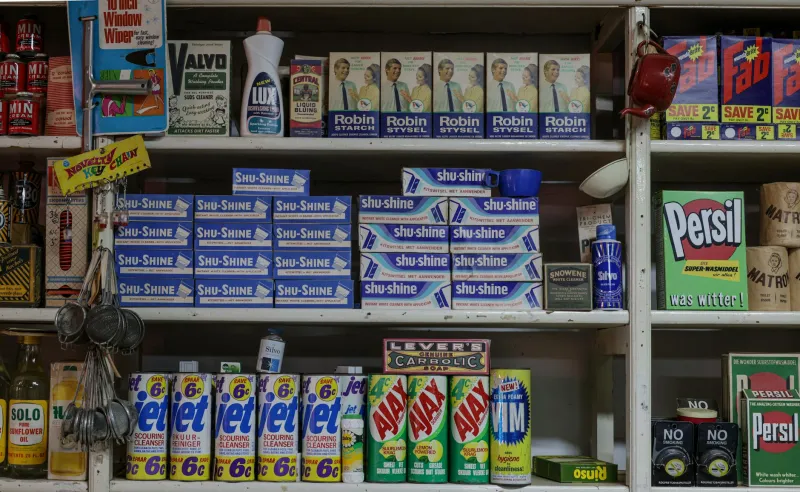
Next time you're standing in the produce aisle staring at four varieties of kale, or comparing sixteen types of pasta sauce, take a moment to consider what that same shopping trip would have looked like in 1955. The store would have been smaller. The shelves would have been sparser. And there's a decent chance you would have known the person helping you find what you needed.
The American supermarket has undergone one of the quietest but most profound transformations in everyday life. What we now take for granted — year-round strawberries, a global spice aisle, self-checkout lanes, stores the size of airplane hangars — would have seemed like science fiction to a mid-century American housewife doing her Thursday shopping.
The Store Your Grandmother Knew
In the postwar decades, the typical American grocery store carried somewhere between 3,000 and 6,000 different products. That sounds like a lot until you compare it to today's average supermarket, which stocks around 30,000 to 50,000 SKUs depending on the chain. Some Walmart Supercenters push past 100,000 items.
But it wasn't just about quantity. The nature of what was available was fundamentally different. Produce was seasonal, and everyone understood that. You ate tomatoes in summer, apples in fall, and citrus in winter. If you wanted strawberries in January, you opened a can. The idea of fresh blueberries in February, flown in from Chile, simply didn't exist as a consumer option.
The frozen food section, which we now treat as a given, was still relatively new in the 1950s. Clarence Birdseye had pioneered flash-freezing technology in the 1920s, but it took decades for frozen foods to become a mainstream grocery staple. Canned goods were the real pantry workhorse — canned vegetables, canned fruit, canned soup. Shelf-stable and reliable, if not exactly exciting.
The Human Element
Here's something that gets lost in the modern shopping experience: people used to talk to each other in grocery stores. Not in the polite, accidental way that sometimes happens now, but as a genuine part of the transaction.
Many mid-century Americans still shopped at smaller neighborhood markets where the butcher knew their name, the produce manager would tell them what was fresh that week, and the checkout clerk had watched their kids grow up. Grocery shopping was embedded in community life in a way that feels almost foreign today.
The self-service supermarket model — where customers picked items off shelves themselves rather than handing a list to a clerk — was itself a relatively recent innovation in the mid-20th century. Piggly Wiggly, founded in Memphis in 1916, is generally credited with introducing the self-service concept. But the full shift to the impersonal, navigate-it-yourself megastore took decades to complete.
What Deregulation, Globalization, and Refrigeration Did to Your Cart
The transformation of the American grocery store happened through several overlapping forces. Improvements in refrigeration and cold-chain logistics made it possible to ship fresh produce across hemispheres without it spoiling. Trade agreements opened U.S. markets to imported foods year-round. And the rise of national supermarket chains created buying power that could source from anywhere on earth.
By the 1980s, the variety explosion was well underway. By the 1990s, the "ethnic foods" aisle — a somewhat reductive label, but a real marker of change — had become standard in most major chains. Salsa outsold ketchup for the first time in 1991. The American palate was expanding, and the grocery store expanded with it.
The 2000s brought the organic movement, the local food revival, and eventually the whole-store redesign around prepared foods and in-store dining. Today's Whole Foods or Wegmans is less a grocery store than a food destination — part restaurant, part market, part experience.
The Tradeoffs Nobody Talks About
It would be easy to frame all of this as pure progress. More choice, more convenience, more variety — what's not to love? But there are a few things worth pausing on.
The consolidation that created mega-chains also wiped out thousands of small, independent grocers. The personal relationships that once existed between shoppers and store workers have been replaced, in many cases, by self-checkout kiosks and smartphone apps. Many Americans now do their grocery shopping without speaking to a single human being.
The abundance of choice has also created its own kind of stress. Psychologists have written extensively about "choice overload" — the paradox that more options can actually make decisions harder and less satisfying. Standing in front of 27 varieties of yogurt isn't obviously more enjoyable than choosing between three.
And for all the fresh produce available year-round, American diets haven't necessarily gotten better. The same stores stocking organic heirloom tomatoes also dedicate enormous floor space to ultra-processed foods that didn't exist fifty years ago.
Same Weekly Task, Different World
The grocery run is one of the most routine things Americans do. Most of us don't think much about it. But that very ordinariness masks how dramatically it has changed — in scale, in variety, in the social experience it represents, and in what it reveals about the broader economy.
Your grandparents would barely recognize the store you shop in. Whether that's a good thing, a bad thing, or just a thing probably depends on whether you miss the butcher who knew your name — or whether you really need those February blueberries.