The Command Center on the Kitchen Wall
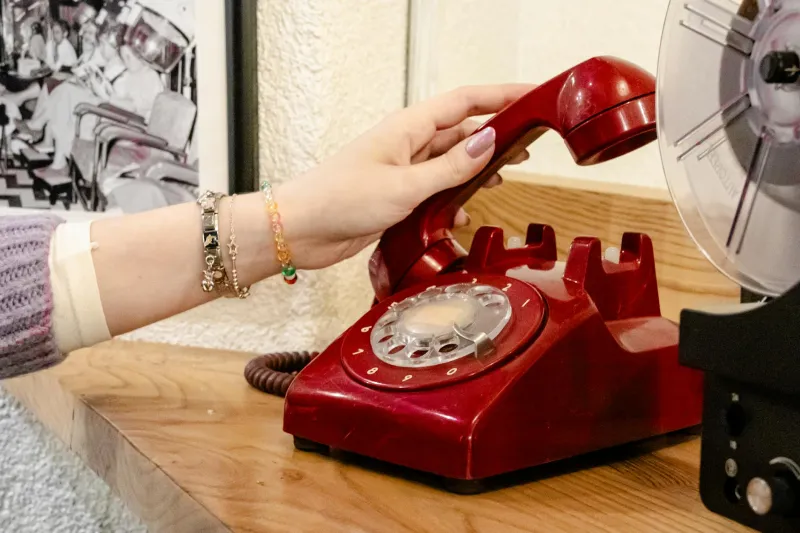
In 1975, the most important piece of technology in the American home wasn't the television or the refrigerator. It was that avocado-green rotary phone mounted to the kitchen wall, its cord stretched and twisted from years of being carried as far as the hallway would allow.
This wasn't just a phone. It was the nerve center of family life, the source of household drama, and the reason teenagers developed elaborate strategies for securing thirty minutes of privacy to talk to their crushes.
One Number, Six People, Infinite Complications
The Murphy family of suburban Chicago shared phone number 847-555-0123 among six people: Mom, Dad, teenage Sarah, middle-schooler Tommy, and visiting Grandma. When that phone rang – and it rang with the authority of a fire alarm – someone had to answer it. But nobody knew who it was for until they picked up.
"Murphy residence, Sarah speaking," became the standard greeting, followed by the awkward dance of figuring out who wanted to talk to whom. If it was for Dad and he was in the garage, someone had to go find him. If it was for Mom and she was upstairs folding laundry, the caller waited while footsteps thundered through the house.
There was no caller ID, no voicemail, no way to screen calls. Every ring demanded immediate attention from whoever was closest to the kitchen. Miss the call, and you'd never know who it was or what they wanted.
The Art of Teenage Phone Warfare
For teenagers, the family phone created a complex social ecosystem that required military-level planning. Sarah couldn't just call her boyfriend whenever she wanted – she had to negotiate phone time with the entire family. Peak calling hours (7-9 PM) were fiercely contested territory.
"I need the phone at eight," Sarah would announce at dinner, staking her claim.
"Well, I'm expecting a call from work," Dad would counter.
"And I promised Mrs. Henderson I'd call about the church bake sale," Mom would add.
Tommy, wise beyond his years, would seize the moment: "I'll give up my time for a dollar."
Privacy was impossible. Every conversation happened within earshot of the kitchen, where Mom was inevitably doing dishes or Dad was reading the paper. Teenagers developed a coded language, speaking in whispers and half-sentences that drove parents crazy but preserved some semblance of confidential communication.
When Long Distance Was Long Money
The phone bill arrived monthly like a financial reckoning. Local calls were free, but anything outside the immediate area code cost real money – sometimes several dollars for a ten-minute conversation. Calling Grandma in Florida was a special occasion that required planning and budget approval from Dad.
Families developed elaborate strategies to minimize long-distance charges. The "one-ring hang-up" became a coded message: "I made it home safely." Conversations were timed with kitchen timers. Kids learned to speak quickly and efficiently, cramming maximum information into minimum minutes.
Sunday afternoons were designated for long-distance calls, when rates dropped slightly. The whole family would gather around the phone, taking turns talking to distant relatives while everyone else listened to both sides of the conversation.
The Social Protocols of Shared Communication
Sharing a phone number created unwritten rules that governed family life. You didn't monopolize the line during dinner hours. You answered politely even if the call wasn't for you. You took accurate messages, writing them on the notepad that lived permanently beside the phone.
But you also learned to eavesdrop strategically. The upstairs extension – if your family was fancy enough to have one – became a surveillance tool. Kids mastered the art of silently picking up the extension to listen in on parental conversations, learning to breathe quietly and hang up without clicking.
When teenage Sarah was grounded from the phone, it was a family-wide punishment. Everyone had to field calls from her friends, take messages, and deal with the social drama that couldn't be resolved through direct communication.
The Death of the Dinner Phone Call
Calling someone during dinner was considered deeply rude, but there was no way to know when families were eating. The phone would ring at 6:30 PM, right as Mom was serving pot roast, and someone would have to answer it. More often than not, it was a telemarketer or someone selling vinyl siding.
The phrase "Can you call back later?" became a cornerstone of phone etiquette. Unlike today, when we can text "busy now, call later," families had to have awkward conversations with callers about timing and availability.
What We Lost in the Translation
Today's world of personal devices and instant communication would seem like magic to the Murphy family of 1975. Everyone has their own number, their own voicemail, their own digital identity. We can text instead of calling, screen unknown numbers, and have private conversations anywhere, anytime.
But something was lost in that transition. The shared phone created shared responsibility and forced negotiation. Families had to coordinate and communicate about communication itself. The kitchen phone was a gathering point, a reason for the family to be in the same physical space.
When the phone rang, it brought the outside world into the family's shared space. Everyone knew who was calling, what the conversations were about, and how the family was connected to the broader community.
The End of an Era
The last residential rotary phone was probably disconnected sometime in the late 1990s, replaced by cordless phones, then cell phones, then smartphones. The kitchen wall where the Murphy family phone once hung now holds a charging station for six different devices.
Each family member now carries more communication power in their pocket than the entire telephone system of 1975 could provide. But they rarely talk to each other, and when they do, it's usually through text messages sent from different rooms of the same house.
The Murphy family phone is gone, but its legacy lives on in the muscle memory of anyone who remembers stretching that coiled cord as far as it would go, hoping for just a few minutes of privacy in a world where communication was communal, public, and gloriously, frustratingly shared.