Letters From the Woods: When Kids Disappeared for Two Months and Nobody Panicked

The Great Summer Disappearing Act
Every June through the 1980s, millions of American children performed what would seem like an impossible magic trick by today's standards: they vanished completely from their parents' daily lives for two solid months. No phone calls. No video chats. No Instagram stories from the dining hall. Just a single weekly letter, written in wobbly cursive on camp stationary, arriving in the mailbox like a message in a bottle from another world.
Camp Waziyatah in Maine. Camp Nebagamon in Wisconsin. Hundreds of summer camps across America operated on the same radical principle: complete separation. Parents dropped their kids at a bus station in June and picked them up in August, having spent eight weeks with about as much contact as if their children had been deployed to Mars.
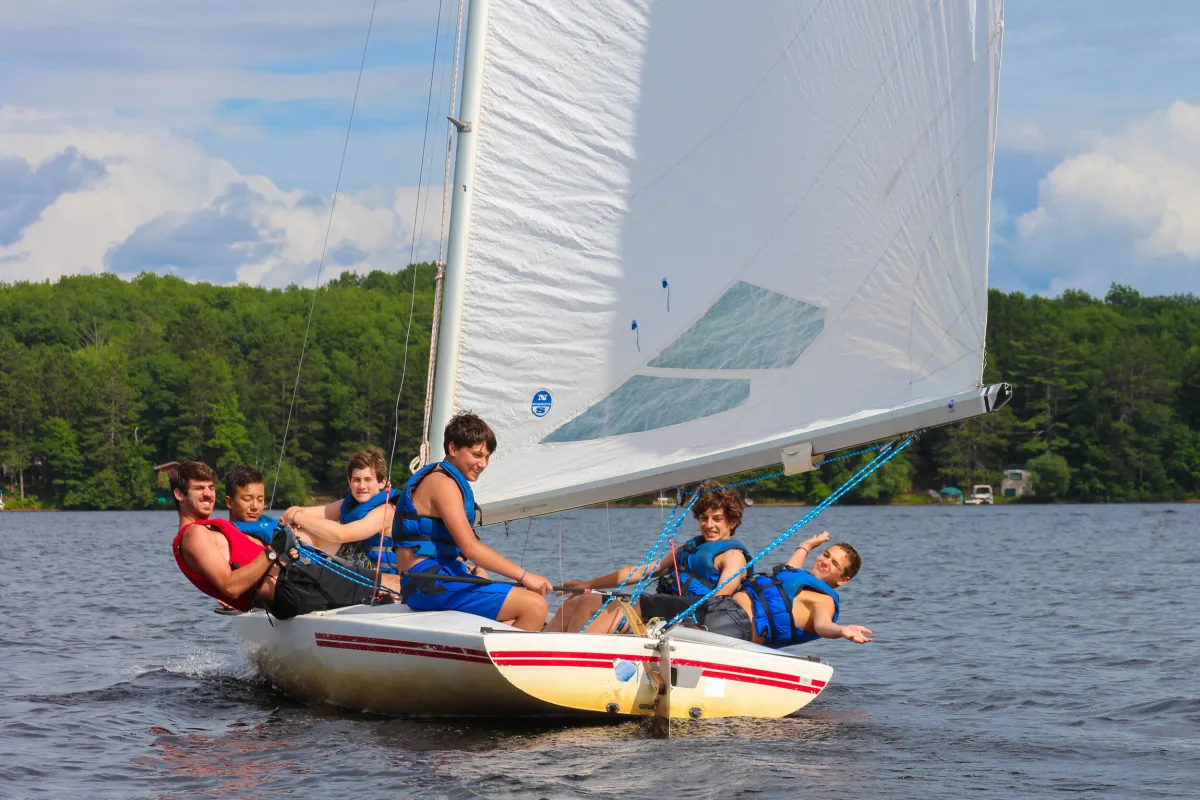 Photo: Camp Nebagamon, via images.squarespace-cdn.com
 Photo: Camp Waziyatah, via i.pinimg.com
The Weekly Letter: America's Lifeline to Missing Children
Those camp letters became treasured documents. Parents would gather around the kitchen table to decode messages like "Dear Mom and Dad, Camp is great. We had bug juice for lunch. Love, Tommy." Three sentences had to sustain families for seven days. Mothers would analyze every word for hidden meanings. Was "bug juice" code for something terrible? Did "camp is great" sound forced?
Meanwhile, children learned to compress their entire week into a single page. Swimming lessons, campfires, new friendships, homesickness, triumph, disaster — all condensed into the attention span of a ten-year-old with a pencil. Many camps required letters home, turning weekly correspondence into a reluctant writing exercise that probably taught more composition skills than most English classes.
Some camps allowed one care package per session. Parents would spend weeks assembling the perfect box: cookies that wouldn't crumble, magazines that wouldn't bore, candy that wouldn't melt. These packages arrived like Christmas morning in July, shared among bunkmates who hadn't seen their families in a month.
The Modern Camp Experience: Never Really Gone
Today's summer camps operate like NASA mission control. Parents receive daily photo galleries showing their child's breakfast, lunch, and dinner. Live webcams let families watch archery practice in real-time. Text alerts notify parents the moment their kid visits the nurse for a scraped knee. Some camps offer scheduled video calls, turning homesickness into a manageable fifteen-minute weekly appointment.
Camp directors now employ full-time social media coordinators whose job is documenting every s'more and every swimming lesson. Parents scroll through hundreds of photos each week, zooming in to spot their child in group shots like a digital Where's Waldo. The modern camp experience has become a carefully curated performance, broadcast live to an audience of worried parents.
Emergency contact systems have evolved from "call if someone dies" to "text if someone sneezes." Parents can track their children's movements through GPS-enabled devices disguised as friendship bracelets. The idea of genuine separation — the core principle that made summer camp transformative — has been systematically engineered out of the experience.
What We Lost When We Made Disappearing Impossible
The old system forced children to develop genuine independence. Homesickness couldn't be cured with a FaceTime call to mom. Conflicts with bunkmates had to be resolved without parental intervention. Children learned to rely on themselves, their counselors, and their fellow campers — not their phones.
Parents, meanwhile, learned to trust both their children and other adults. Sending a kid to camp for eight weeks with minimal contact required faith in the camp's competence and confidence in their child's resilience. It was a master class in letting go, practiced by millions of American families every summer.
The weekly letters created a different kind of intimacy. Children learned to reflect on their experiences and communicate what mattered most. Parents learned to read between the lines and trust their instincts. The delayed, limited communication forced both sides to be more intentional about what they shared.
The Anxiety Economy of Modern Parenting
Today's constant connectivity reflects deeper changes in American parenting culture. The same forces that put GPS trackers in backpacks and security cameras in nurseries have transformed summer camp from a separation experience into an extended playdate with professional documentation.
We've created systems that make parents feel more informed while making children less independent. The daily photo galleries provide an illusion of closeness while actually preventing the kind of genuine separation that builds confidence. Modern camps spend more time managing parental anxiety than developing childhood resilience.
The Last Frontier of Childhood Independence
A few camps still operate on the old model, marketing themselves as "digital detox" experiences. These holdouts recognize that the magic of summer camp wasn't just about swimming and campfires — it was about the transformation that happens when children are genuinely on their own, forced to navigate friendships, conflicts, and challenges without their parents' immediate input.
The irony is that modern parents want their children to be independent and confident, but they've eliminated most opportunities for kids to practice those skills. We've made childhood safer and more documented, but potentially less transformative.
Those weekly letters from camp weren't just updates — they were evidence that children could survive and thrive beyond their parents' immediate reach. In our rush to stay connected, we may have disconnected our kids from the very experiences that once made summer camp a rite of passage rather than just an expensive babysitting service with better marketing.