Must-See TV Was Actually Must-See: When America Watched the Same Show at the Same Time

The Tyranny of the TV Guide
Every American household had one: the thick weekly TV Guide magazine, its pages already dog-eared by Tuesday, covered in pencil marks and family negotiations. "Dallas" at 9 PM Friday. "The Cosby Show" Thursday at 8. "60 Minutes" Sunday at 7. These weren't suggestions — they were appointments with America's collective consciousness.
Families planned their entire week around broadcast schedules. Dinner had to be finished by 8 PM Thursday or you'd miss the opening of "Cheers." Friday night dates were scheduled around "Miami Vice." Sunday evening homework waited until after "The Wonderful World of Disney." Television didn't adapt to your schedule — your schedule adapted to television.
The weekly ritual began Sunday night when the new TV Guide arrived. Families would gather around the coffee table, negotiating viewing priorities for the upcoming week. "I need the TV Tuesday at 8 for 'Happy Days.'" "But that's when 'Laverne & Shirley' is on!" These were serious household diplomatic crises, resolved through complex time-sharing agreements and strategic use of the family's second television, if they were lucky enough to have one.
The Sacred Programming Blocks
Networks understood their power and wielded it strategically. NBC's "Must See TV" Thursday lineup wasn't just marketing — it was cultural programming. "The Cosby Show" led into "Family Ties," which flowed into "Cheers," culminating with "Night Court." Families stayed planted on their couches for three hours straight, held captive by appointment television.
Saturday morning belonged entirely to children. Parents could sleep in because every network programmed four hours of cartoons starting at 7 AM. Kids would position themselves inches from the TV screen with bowls of sugary cereal, watching "Schoolhouse Rock" between "The Smurfs" and "The Flintstones." Missing Saturday morning cartoons meant missing them entirely — no second chances, no reruns until next Saturday.
Prime time was sacred family time, whether families wanted it or not. The entire household would migrate to the living room after dinner, claiming their usual spots on the couch for the evening's entertainment. Arguments over channel control were settled by parental decree or complex rotation systems. The remote control, when families finally had one, held the power of a royal scepter.
The Cultural Event of Shared Viewing
When J.R. Ewing was shot on "Dallas," 83 million Americans watched the resolution episode simultaneously. Office water cooler conversations the next morning assumed everyone had seen the same thing at the same time. "Did you see what happened on 'Cheers' last night?" wasn't really a question — of course you saw it. Everyone saw it. There was nothing else to see.
Special episodes became genuine cultural events. The final episode of "MAS*H" drew 106 million viewers — nearly half of America's population — all watching the same story unfold at exactly the same moment. Social media didn't exist, but shared television viewing created the same collective experience. America processed major cultural moments together, in real-time, through their television screens.
Missing a popular show meant genuine social isolation. If you weren't home Thursday night to watch "The Cosby Show," you were excluded from Friday's conversations. Teachers would reference popular TV shows in class, assuming universal familiarity. Television literacy was actual literacy — understanding cultural references required keeping up with the broadcast schedule.
The Appointment You Couldn't Reschedule
Before VCRs became affordable in the mid-1980s, missing your show meant missing it forever. Families would rush home from dinner, cancel social plans, and organize their lives around broadcast times. "I can't go out Friday night — 'Dallas' is on." This wasn't antisocial behavior; it was rational schedule management in an era of television scarcity.
When VCRs finally arrived, they seemed revolutionary. You could record one show while watching another! You could watch programs at your convenience! But early VCR technology was complex enough that many families never mastered the programming. The blinking "12:00" on unprogrammed VCRs became a symbol of technological intimidation. Recording shows required advance planning, blank tapes, and the hope that nothing would go wrong with the timing.
Even with VCRs, most families still watched shows during their original broadcast times. Recording was for backup or for capturing something special. The social currency of television required real-time viewing. You couldn't participate in Monday morning "Dallas" discussions if you hadn't watched Friday night's episode yet.
The Streaming Revolution That Changed Everything
Netflix's "binge-watching" model shattered the appointment television paradigm. Entire seasons dropped simultaneously, allowing viewers to consume shows at their own pace. The concept of "must-see TV" became meaningless when every show was available on-demand. Families could watch different programs on different devices in different rooms, fragmenting the shared viewing experience that had defined American evenings for decades.
Modern streaming services offer infinite choice, but that abundance has eliminated the cultural cohesion that scarcity once provided. When everyone can watch anything at any time, nobody watches the same thing at the same time. Water cooler conversations about last night's TV have been replaced by "Have you seen...?" recommendations that assume nothing about shared viewing experiences.
The algorithm-driven recommendation systems of Netflix, Hulu, and Amazon Prime create personalized viewing bubbles. Each family member receives different suggestions based on their viewing history. The shared cultural references that once united American television audiences have splintered into millions of individual entertainment silos.
What We Lost When Everything Became Available
The rigid broadcast schedule created artificial scarcity that made television feel more valuable. When you could only watch "The A-Team" Tuesday at 8 PM, you paid attention. When you can stream any episode of any show at any moment, individual episodes lose their significance. The anticipation of waiting a week between episodes has been replaced by the instant gratification of immediate access.
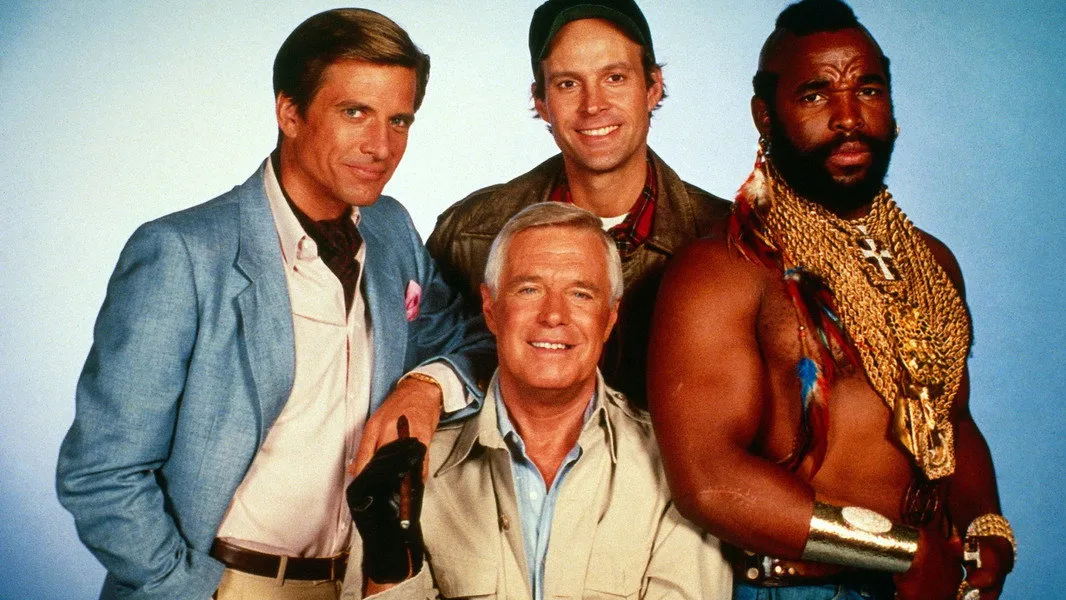 Photo: The A-Team, via www.themoviedb.org
Shared viewing experiences created genuine community. Families negotiated, compromised, and watched programs together that no individual family member would have chosen. Children were exposed to adult programming, adults watched children's shows, and everyone developed broader cultural literacy through forced exposure to diverse content.
The weekly rhythm of television programming provided structure to American life. Monday night meant "Monday Night Football." Tuesday brought "Happy Days." Wednesday offered "The Facts of Life." This predictable schedule created comfort and anticipation. Modern streaming's infinite flexibility has gained convenience but lost the comforting ritual of appointment television.
 Photo: Monday Night Football, via www.the-sun.com
The Search for Shared Cultural Moments
Occasionally, modern television still creates collective viewing experiences. The Super Bowl, award shows, and season finales of popular series can still unite millions of viewers simultaneously. But these moments feel increasingly rare and precious, highlighting how much we've lost from the era when shared viewing was the default rather than the exception.
 Photo: The Super Bowl, via entertainmentnow.com
Some families are attempting to recreate appointment television through deliberate scheduling. "Family movie night" and designated binge-watching sessions try to capture the communal viewing experience that once happened naturally. But these feel forced compared to the organic shared culture that emerged from television scarcity.
The evolution from three networks to infinite streaming options reflects broader changes in American culture — from shared experiences to personalized choices, from community viewing to individual consumption, from appointment television to on-demand entertainment. We've gained control over our viewing experience but lost something essential about watching the same story unfold together, at the same moment, as a nation.