The Shopkeeper Knew Your Family's Story — Before Big Box Stores Turned Shopping Into Speed Dating
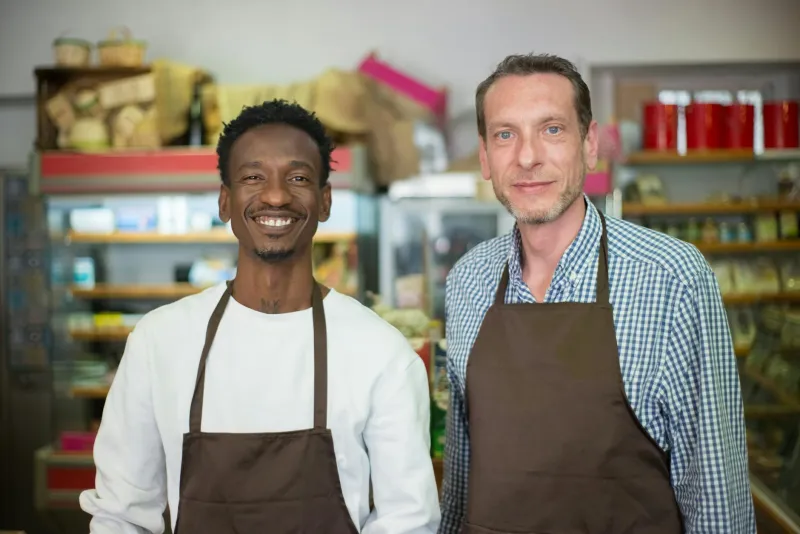
When Shopping Was a Relationship, Not a Transaction
Walk into Murphy's Corner Market in 1965, and old man Murphy didn't just know your name — he knew your story. He remembered that your mother always bought the thick-cut bacon because your father complained about the thin stuff. He'd set aside the ripest tomatoes on Tuesday because he knew Mrs. Henderson from down the block would stop by after her bridge game. When your family was tight on money during your dad's hospital stay, Murphy would quietly note "pay when you can" in his worn ledger book.
This wasn't exceptional customer service. This was Tuesday.
Today, you can buy groceries at 3 AM, scan your own items, and leave without speaking to a single human being. Amazon knows you reorder laundry detergent every six weeks and suggests you might like those organic crackers based on your purchase history. It's remarkably efficient. It's also completely hollow.
The Economics of Knowing Your Customers
The corner store economy ran on relationships, not algorithms. Sam the butcher didn't just cut meat — he was a financial advisor who happened to work with ribeye. He'd suggest the cheaper chuck roast when times were tough, or recommend the perfect cut for your anniversary dinner. He extended informal credit not because he was running a bank, but because he knew your character.
This personal touch wasn't charity; it was smart business. Customer loyalty meant everything when your competition was the shop three blocks over, not a megastore with 40,000 products. Shopkeepers invested in relationships because those relationships were their competitive advantage.
Hardware store owner Bill Jenkins could look at you, assess your skill level, and talk you out of the expensive tool that would sit unused in your garage. He'd recommend the simpler solution, knowing you'd be back when you needed something else. His profit came from decades of repeat business, not maximizing each transaction.
The Hidden Costs of Efficiency
When Walmart and Home Depot arrived, they brought undeniable benefits: lower prices, vast selection, and consistent availability. You could buy a hammer at midnight or find 47 different types of breakfast cereal. The efficiency was revolutionary.
But efficiency has a price that doesn't appear on receipts.
The teenager working the hardware section at a big box store might know where the screws are located, but he can't tell you which type will work best for hanging your grandmother's mirror. The self-checkout machine processes your payment faster than any human cashier, but it doesn't notice that you're buying sympathy flowers and offer a quiet word of comfort.
When Algorithms Replace Intuition
Modern retail tries to recreate that personal touch through data. Amazon's recommendation engine is sophisticated enough to suggest products you didn't know you wanted. Target's algorithms famously figured out a teenager was pregnant before her father did, based solely on her purchasing patterns.
Yet something fundamental is missing. The algorithm knows you buy organic milk every two weeks, but it doesn't know you're buying it because your daughter is lactose intolerant and you're worried about her getting enough calcium. It can predict your behavior, but it can't share your concerns.
The old shopkeeper's knowledge came from human connection. He remembered your story because it mattered to him. Today's retail personalization comes from surveillance. The difference isn't just philosophical — it's emotional.
The Social Infrastructure We Lost
Neighborhood shops weren't just businesses; they were community anchors. The corner store was where you learned that the Johnsons were moving to Florida, where teenagers got their first jobs, where elderly neighbors could walk for essentials without driving across town to a strip mall.
When Murphy's Corner Market closed, the neighborhood didn't just lose a place to buy milk. It lost a gathering spot, an information hub, and a source of informal community support. The economic efficiency of modern retail came with a social cost that's hard to measure but impossible to ignore.
What We Gained, What We Gave Up
Nobody's arguing we should return to the days of limited selection and higher prices. The convenience of modern shopping is real, and the savings help family budgets. You can buy practically anything online and have it delivered to your door. That's progress.
But it's worth acknowledging what we traded away. We exchanged relationships for transactions, community knowledge for corporate data, and human intuition for algorithmic predictions. We gained efficiency and lost intimacy.
The corner store knew your order before you said a word because the person behind the counter cared about your family's story. Today's retail knows your patterns, predicts your needs, and optimizes your experience. It's remarkably sophisticated.
It's also remarkably lonely.
Sometimes the most efficient path isn't the most human one. And sometimes, being known as more than just a customer ID number is worth paying a little extra for.