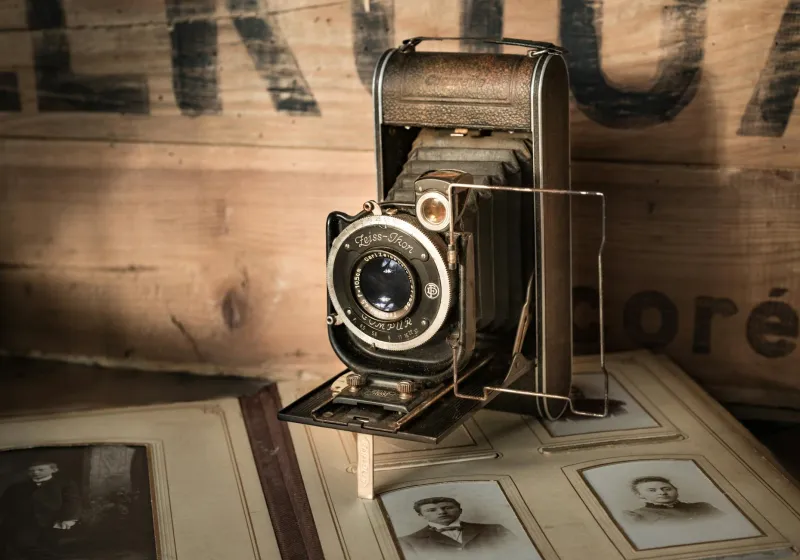
The Camera That Cost Three Months' Salary
In 1955, Robert Sullivan spent $89 on a Kodak Brownie camera — roughly three months of discretionary income for the average American worker. It was a significant purchase, the kind that required family consultation and careful budgeting. The camera would serve the Sullivan family for the next fifteen years, documenting births, graduations, holidays, and the rare special occasion deemed worthy of permanent preservation.
Each roll of film cost $2 and contained just 12 exposures. Development added another $3, bringing the total cost of capturing and printing a dozen photos to about $50 in today's money. With such economics, every photograph required deliberate consideration. Robert would spend minutes composing each shot, making sure everyone was properly positioned, waiting for the perfect moment before pressing the shutter.
The anticipation between taking photos and seeing results created its own ritual. Families would drop off their film at the local drugstore and wait a week for processing. The envelope of freshly developed photographs became a treasured delivery, with family members gathering around the kitchen table to examine each image and relive the captured moments.
When Photographs Were Investments, Not Impulses
The economics of film photography shaped how Americans approached image-making in profound ways. A family might take 50-100 photographs in an entire year, each one representing a conscious decision to preserve a particular moment. Wedding photographers typically shot just two or three rolls of film, requiring them to capture the essential moments with precision and skill.
Photo albums weren't just storage solutions — they were curated collections that told the story of a family's life. Parents would spend evenings carefully arranging photographs in chronological order, writing captions that provided context for future generations. Children would flip through these albums repeatedly, memorizing the visual narrative of their family history.
The scarcity created emotional weight. Each photograph represented not just a moment in time, but a financial commitment to remembering that moment. Families treasured their photo collections because they represented significant investments of both money and intention.
The Polaroid Revolution: Instant Gratification at Premium Prices
The introduction of Polaroid cameras in the 1960s offered instant results but at an even higher cost per image. A single Polaroid photo cost about $2 in 1970s money — roughly $15 today. Families used Polaroids sparingly, typically for special occasions when the immediacy of seeing results justified the premium price.
Even this "instant" photography maintained the deliberate nature of image-making. You still had to buy film cartridges, still had to consider whether a moment was worth the cost, and still created physical objects that demanded careful handling and storage.
The ritual of watching a Polaroid image slowly develop created its own form of anticipation and excitement. Family members would gather around the emerging photograph, watching as faces and scenes gradually appeared on the white square of film. Each Polaroid was unique and irreplaceable — there were no negatives, no second chances.
The Digital Disruption: When Storage Became Infinite
The transition to digital photography fundamentally altered the relationship between Americans and their images. Suddenly, the marginal cost of taking an additional photograph dropped to essentially zero. Memory cards could store hundreds or thousands of images, and computers provided unlimited storage capacity.
Early digital camera adopters in the 1990s initially maintained some of the deliberate habits from the film era. They would still consider composition carefully and delete obviously poor shots to conserve memory card space. But as storage became cheaper and cameras became more sophisticated, these constraints rapidly disappeared.
The introduction of smartphones with built-in cameras completed the transformation. By 2010, most Americans carried devices capable of taking unlimited photographs at any moment, with no additional cost per image and instant ability to view, edit, and share results.
The Trillion-Photo Economy
Today, Americans collectively take over one trillion photographs annually — more than 3,000 per person, including children. The average smartphone contains thousands of images, most of which are never viewed after the moment they're captured. Photo streams have become endless scrolls of visual data rather than curated collections of meaningful memories.
The abundance has created new behaviors that would have been unthinkable in the film era. People take multiple shots of the same scene, hoping to capture the perfect moment through volume rather than timing. "Photo shoots" occur for routine activities like meals, workouts, and daily outfits. The documentation of life has become almost as important as living it.
Social media platforms have transformed photography from personal memory-keeping into public performance. Images are created not primarily for future reminiscence but for immediate social validation. The average Instagram photo receives attention for roughly 48 hours before disappearing into the endless scroll of new content.
The Paradox of Infinite Memory
Despite taking exponentially more photographs, modern Americans often struggle to remember significant events from their own lives. The ease of capturing everything has eliminated the selection process that once forced people to identify and prioritize their most meaningful experiences.
Research suggests that the act of photographing experiences can actually impair memory formation, a phenomenon psychologists call the "photo-taking impairment effect." When people rely on their cameras to remember experiences, they pay less attention to the details that would normally encode those experiences in long-term memory.
The physical photo albums that once served as family storytelling devices have largely disappeared. Digital photos remain scattered across devices, cloud services, and social media platforms, making it difficult to construct coherent narratives from the visual fragments of modern life.
The Economics of Forgotten Images
The financial transformation is equally dramatic. Americans now spend more money on photo storage and cloud services than previous generations spent on film and development, but they interact with their images far less frequently. The average smartphone user has 2,000+ photos but regularly looks at fewer than 50 of them.
Professional photography has bifurcated into high-end luxury services and automated smartphone apps. Wedding photographers now take 3,000-5,000 images per event, delivering hundreds of edited photos that couples often struggle to organize or display meaningfully.
The printing industry has largely collapsed as Americans have shifted to digital-only photo consumption. The physical photographs that once anchored family memories in tangible form have been replaced by temporary displays on screens that require electricity and functioning technology to access.
Rediscovering Intentional Photography
Some photographers and families are experimenting with "analog" approaches that reintroduce scarcity and intention into image-making. Film photography has experienced a renaissance among younger photographers who appreciate the deliberate process and distinctive aesthetic of chemical processing.
Others are creating digital workflows that mimic the selectivity of the film era — taking many photos but carefully choosing only a few for printing and long-term preservation. Photo book services have emerged to help families create physical albums from their digital collections, though the curation process often proves overwhelming given the volume of available images.
The challenge isn't returning to the limitations of 1955, but finding ways to balance the convenience of modern technology with the intentionality that made photographs meaningful. In an age when anyone can document everything, the art lies not in capturing moments, but in choosing which moments deserve to be remembered.
Robert Sullivan's carefully composed family portraits from 1955 still hang on walls and sit on mantels, viewed and appreciated by multiple generations. The question facing modern families is whether any of their thousands of annual photographs will prove equally enduring — or if the abundance that made photography effortless also made it forgettable.