The Great Library Expedition of 1978
Twelve-year-old Sarah Chen had two weeks to write a five-page report on the Roman Empire for her seventh-grade history class. In 1978, that meant one thing: a pilgrimage to the public library that would consume her entire weekend.
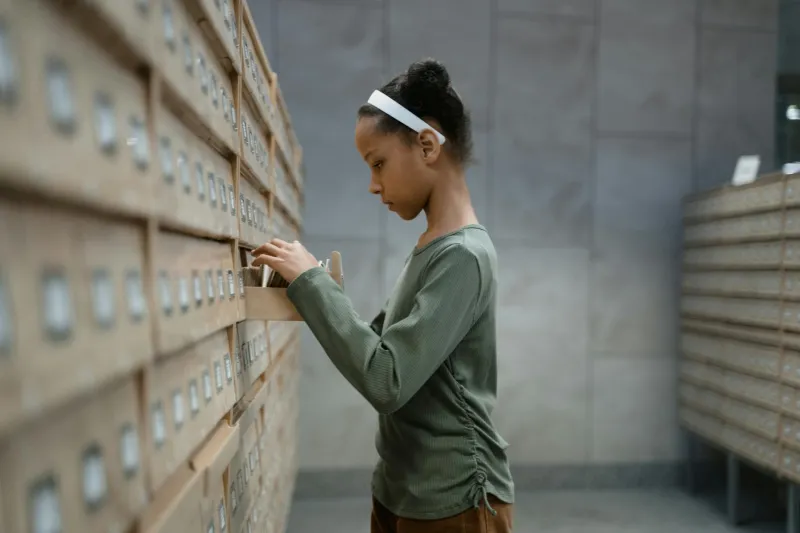
Sarah's research journey began on Saturday morning with a bike ride to the Millfield Public Library, her backpack loaded with index cards, pencils, and a small notebook. She'd spend the next six hours navigating the card catalog, a massive wooden cabinet filled with thousands of tiny drawers containing hand-typed cards for every book in the library's collection.
Finding information about Rome meant pulling out drawer after drawer, flipping through cards filed under "Rome — History," "Roman Empire," "Caesar, Julius," and dozens of related topics. Each promising lead required a trek to the appropriate section of the library, where she'd discover that half the books she needed were already checked out or mysteriously missing from the shelves.
By Sunday afternoon, Sarah had visited two additional libraries, filled 47 index cards with handwritten notes, and developed an intimate knowledge of the Dewey Decimal System. Her report would be good — not because she was particularly brilliant, but because the research process itself forced her to become an expert on her topic.
When Information Was Scarce and Precious
The pre-internet research process created a completely different relationship with knowledge. Information wasn't abundant; it was scarce and had to be earned through effort and persistence. Students like Sarah didn't just find facts — they went on expeditions to capture them.
The Encyclopedia Britannica, if your family was fortunate enough to own a set, represented the pinnacle of accessible knowledge. Those 32 volumes, costing roughly $1,500 in today's money, contained what most families considered the sum of human understanding. Students would spend hours reading not just the specific article they needed, but the related entries that caught their eye along the way.
Librarians weren't just book organizers — they were information archaeologists who could guide students through the complex process of knowledge discovery. A good librarian could suggest research paths that students would never have found on their own, connecting seemingly unrelated topics and revealing the deep structures of how information was organized.
The physical act of research created its own educational value. Students had to plan their library visits, budget their time, and develop strategies for extracting the most useful information from limited sources. They learned to read carefully and critically because they couldn't simply search for another source if the first one didn't provide exactly what they wanted.
The Four-Minute Miracle of Modern Research
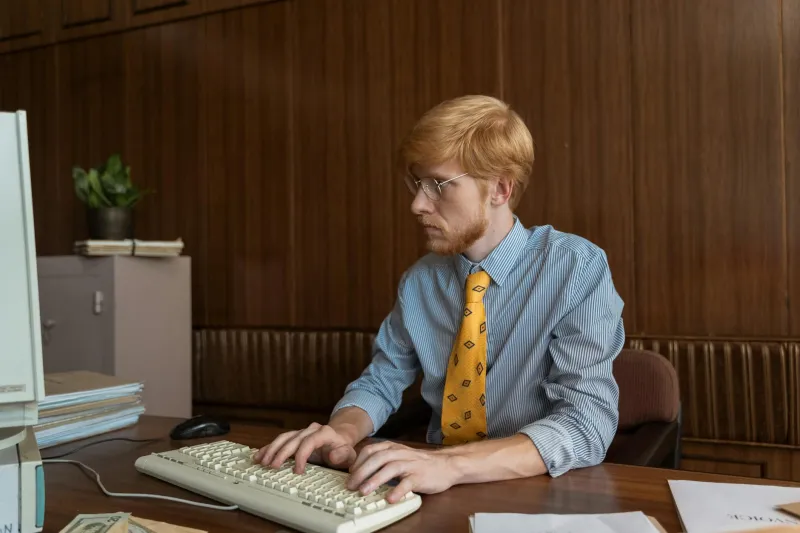
Today's seventh-grader researching the Roman Empire opens a laptop and types "Roman Empire history" into Google. In 0.43 seconds, she has access to 47 million results. Wikipedia provides a comprehensive overview with hundreds of cited sources. Google Scholar offers access to peer-reviewed academic papers. YouTube contains documentaries from the History Channel and lectures from Harvard professors.
Within four minutes, she can access more primary sources, scholarly articles, and expert analysis than Sarah could have found in a month of library visits. She can read Caesar's actual writings, view high-resolution photographs of Roman artifacts, and even take virtual tours of Pompeii.
The transformation is so complete that many schools have stopped teaching traditional research methods entirely. Students no longer learn to use card catalogs, navigate reference sections, or develop systematic approaches to information gathering. The skills that previous generations considered essential to education have become as obsolete as learning to operate a rotary phone.
The Unintended Consequences of Effortless Information
But something crucial was lost in this transition from scarcity to abundance. When information required effort to obtain, students developed what educators call "information literacy" — the ability to evaluate sources, synthesize different perspectives, and think critically about what they read.
Modern students often struggle with information overload rather than information scarcity. They can find thousands of sources but lack the skills to determine which ones are reliable, relevant, or worth reading. The ease of copying and pasting has replaced the learning that occurred when students had to process information through their own handwriting and note-taking.
Research has become a skimming exercise rather than a deep dive. Students bounce from website to website, collecting facts without developing understanding. They can access primary sources but often lack the context to interpret them meaningfully. The democratization of information has paradoxically made it harder, not easier, for students to become truly knowledgeable about their topics.
The Memory Palace We Abandoned
Perhaps most significantly, the effort required for pre-internet research created lasting memories and deep understanding. Sarah's weekend-long journey through multiple libraries meant that she genuinely learned about the Roman Empire, not just completed an assignment about it. The facts she worked so hard to uncover became part of her long-term knowledge base.
Modern students often forget what they've researched as soon as they submit their assignments. The ease of re-finding information has eliminated the evolutionary pressure to remember it. Why memorize the dates of Caesar's campaigns when you can Google them in seconds?
This shift has profound implications for how knowledge accumulates in young minds. Previous generations built mental frameworks through the slow, deliberate process of research and note-taking. Today's students have instant access to facts but often lack the conceptual structures to organize and retain them.
The Serendipity of Slow Discovery
The old research process also created opportunities for serendipitous learning that rarely occur in the age of targeted search results. Sarah might discover a fascinating book about Roman architecture while looking for information about political systems. She might stumble across connections between Roman law and modern legal systems while browsing the reference section.
Google's algorithms, designed to provide exactly what users are searching for, actually narrow the scope of discovery. Students find precisely what they're looking for and nothing more. The happy accidents that led previous generations to become Renaissance learners have been optimized away.
Finding Balance in the Information Age
Some educators are experimenting with hybrid approaches that combine modern efficiency with traditional depth. Students might begin research online to get an overview, then be required to find and read physical books to develop deeper understanding. Others assign "analog research" projects that require students to use pre-internet methods.
The goal isn't to return to the inefficiencies of 1978, but to recapture the learning benefits that came with those inefficiencies. The weekend Sarah spent researching the Roman Empire taught her skills that extended far beyond history — how to plan complex projects, evaluate conflicting sources, and persist through frustrating obstacles.
Today's students can access the world's knowledge in minutes, but they're still learning how to transform that access into genuine understanding. The challenge isn't finding information anymore — it's figuring out what to do with it once you have it.