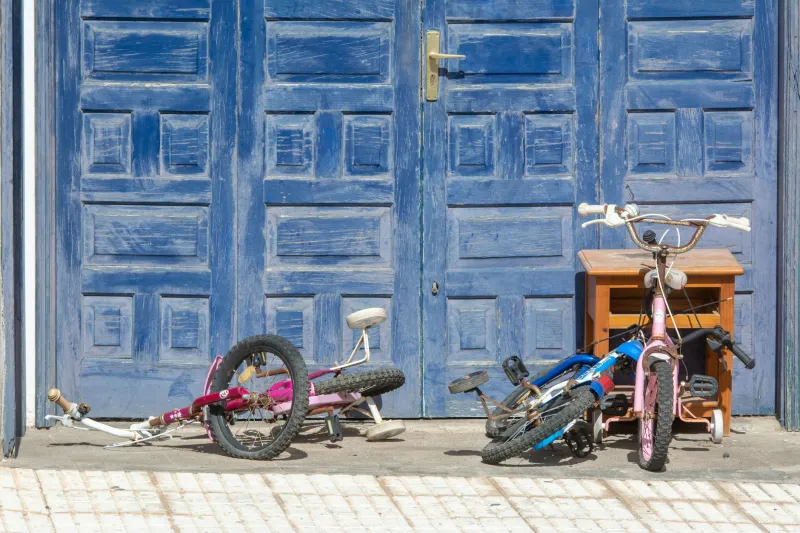
Every summer morning in 1973, nine-year-old Tommy Brennan would wolf down a bowl of cereal, grab his Schwinn Stingray, and disappear into the suburban labyrinth of Maple Grove, Minnesota. He'd return twelve hours later, grass-stained and exhausted, with stories of creek explorations, pickup baseball games, and elaborate neighborhood-wide games of tag that involved dozens of kids and stretched across multiple city blocks.
His mother never asked where he'd been. She didn't need to — because in 1973, that kind of freedom wasn't unusual. It was childhood.
The Unsupervised Generation
For kids growing up in the 1960s and 70s, summer meant liberation. Parents would issue simple instructions: "Be back when the streetlights come on." "Don't cross the highway." "Stay out of the Hendersons' yard." Beyond that, the world was yours to explore.
Children as young as six would roam neighborhoods in packs, settling their own disputes, creating elaborate games with rules that evolved throughout the day, and developing a sophisticated understanding of local geography that would make modern GPS systems jealous. They knew every shortcut, every friendly dog, every house where you could get a drink of water without questions.
The playground wasn't a carefully designed, safety-tested environment with rubberized surfaces and age-appropriate equipment. It was wherever kids decided to play — vacant lots, construction sites, the woods behind the shopping center. Risk assessment was done in real-time by eight-year-olds who learned through experience which tree branches would hold their weight and which would not.
The Great Indoor Migration
By the 1990s, this world had largely vanished. The shift happened gradually, then suddenly. News reports about child abductions, though statistically rare, dominated headlines. Suburban design changed, prioritizing car traffic over pedestrian access. Both parents increasingly worked outside the home, leaving fewer adults available to maintain the informal neighborhood watch that had made unsupervised play feel safe.
Playgrounds became sterile, standardized environments surrounded by warning signs about age limits and supervision requirements. The concept of "stranger danger" replaced the more nuanced understanding that most adults in your community could be trusted to help a lost or injured child.
Most importantly, childhood itself became a scheduled activity. Soccer practice replaced pickup games. Organized playdates replaced the spontaneous gathering of whoever happened to be outside. The bicycle gave way to the minivan as the primary mode of child transportation.
The Numbers Don't Lie
Research by sociologist Peter Gray shows that the amount of time children spend in unsupervised play has declined by 90% since the 1970s. Meanwhile, the amount of time spent in adult-organized activities has more than doubled.
A 2015 study found that 70% of mothers had played outside unsupervised as children, but only 29% allowed their own children the same freedom. The average "roaming radius" for children — the distance they're allowed to travel from home without adult supervision — has shrunk from about a mile in 1970 to about 300 yards today.
In many suburban neighborhoods, it's now unusual to see children outside at all during daylight hours. The streets that once echoed with the sounds of bikes, skateboards, and pickup games now sit empty except for the occasional jogger or dog walker.
The Helicopter Effect
What replaced that freedom was what researchers call "intensive parenting" — the belief that children need constant adult guidance and protection to develop properly. Parents began to see unsupervised time not as healthy independence, but as potential neglect.
Legal changes reinforced this shift. Many states now have laws that can charge parents with neglect for allowing children under certain ages to be unsupervised, even briefly. Schools require signed permission slips for activities that previous generations would have considered routine.
The result is a generation of children who are physically safer than ever before but who have fewer opportunities to develop independence, problem-solving skills, and confidence in their own abilities.
What We Lost
The children of the 1970s learned crucial life skills through unsupervised play that are difficult to replicate in organized settings. They learned to negotiate conflicts without adult intervention, to assess and manage physical risks, to create their own entertainment, and to navigate complex social dynamics.
They also developed what psychologists call "environmental competence" — a deep familiarity with their physical surroundings that came from hours of exploration. They knew their neighborhoods intimately, not as destinations to be driven to, but as territories to be conquered and understood.
Perhaps most importantly, they learned that they were capable of handling unexpected situations, making decisions, and solving problems on their own. This confidence carried over into other areas of life, creating adults who were more comfortable with uncertainty and more willing to take reasonable risks.
The Price of Protection
Today's children are undoubtedly safer from the rare but highly publicized dangers that dominated 1980s and 90s news cycles. They're less likely to be seriously injured in playground accidents, less likely to get lost, and less likely to encounter truly dangerous situations without adult supervision.
But they're also more likely to struggle with anxiety, less confident in their own abilities, and less familiar with their own neighborhoods. They've traded the small daily risks that build resilience for protection from the rare catastrophic risks that make headlines.
Tommy Brennan, now 59, watches his own grandchildren navigate their carefully scheduled, adult-supervised childhoods and sometimes wonders what they're missing. Not the specific adventures he had — those were products of a particular time and place — but the feeling of being trusted to create their own adventures.
In our effort to protect children from every possible danger, we may have protected them from childhood itself.