When Your Brain Was Your Phone Book: The Lost Art of Memorizing Numbers
When Your Brain Was Your Phone Book: The Lost Art of Memorizing Numbers
In 1985, if you wanted to order pizza, you had two choices: flip through a thick Yellow Pages directory or dial the number you'd memorized weeks ago after calling Domino's for the first time. Most Americans chose option two.
Back then, the average person could recite 20 to 30 phone numbers from memory without hesitation. Your mom's work number, your best friend's house, the dentist, the mechanic, maybe even your crush from chemistry class — these seven or ten-digit sequences lived permanently in your head, ready to be retrieved at a moment's notice.
Today, most people can't remember their own phone number, let alone anyone else's.
The Mental Gymnasium of the Pre-Digital Era
Before 1990, memorizing phone numbers wasn't just useful — it was essential for social survival. There were no contact lists, no speed dial, and certainly no smartphones. If you wanted to call someone, you either knew their number or you didn't communicate.
This created a fascinating cognitive phenomenon. Americans developed what neuroscientists now call "number chunking" — the ability to break long sequences into memorable patterns. A number like 555-PIZZA (555-74992) became as familiar as your own address.
Families developed elaborate systems. Kitchen walls were covered with handwritten phone lists, stuck to refrigerators with magnets shaped like tiny hamburgers or school photos. But the real storage happened upstairs, in your brain. Children as young as five could recite their home number flawlessly, and teenagers knew their friends' numbers better than their multiplication tables.
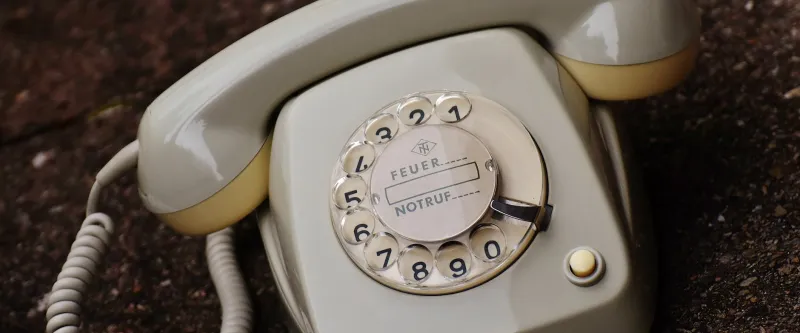
The physical act of dialing reinforced memory. Rotary phones demanded deliberate finger movements — you had to pull each number clockwise, wait for it to spin back, then move to the next digit. Touch-tone phones were faster but still required conscious muscle memory. Your fingers learned the rhythm: 4-1-5... pause... 5-5-5... pause... 7-4-9-9.
When Everything Changed
The death of number memorization didn't happen overnight. It was a gradual surrender that began in the 1990s with caller ID and speed dial, accelerated with cell phones in the early 2000s, and reached completion with smartphones around 2007.
Sudenly, your phone became smarter than you needed to be. Why memorize your dentist's number when you could just tap "Dr. Martinez" on a screen? Why remember your mom's cell when "Mom" was right there in your contacts?
The shift felt liberating at first. No more mental strain, no more forgotten numbers, no more embarrassing moments of drawing a blank when someone asked for your digits. Technology had solved a problem we didn't realize we wanted solved.
What We Lost in Translation
But something unexpected happened when we outsourced our number memory to machines: we lost more than just digits.
Neurologists studying memory formation have discovered that the act of memorizing phone numbers was actually a form of mental exercise. Those seven to ten-digit sequences strengthened the same neural pathways responsible for remembering names, faces, directions, and even complex problem-solving.
Dr. Merlin Donald, a cognitive scientist at Queen's University, calls this "hybrid thinking" — the seamless integration of biological memory with external tools. For most of human history, we used our brains as primary storage and external tools as backup. Now we've flipped the relationship entirely.
The consequences extend beyond phone numbers. Studies show that people under 30 are significantly worse at remembering directions, addresses, and even the names of people they've met multiple times. We've become dependent on digital crutches for basic cognitive functions that previous generations handled automatically.
The Ripple Effects
Consider what else disappeared along with memorized phone numbers:
The social ritual of "getting someone's number" required genuine intention. You had to write it down, or better yet, commit it to memory immediately. This created a natural filter for relationships — casual acquaintances didn't make it into your mental rolodex.
Emergency preparedness took on different meaning when critical numbers lived in your head, not your device. If your phone died or got lost, you could still call for help, reach family members, or contact your doctor. Today, a dead battery can leave you completely isolated.
The intimacy of number knowledge created deeper connections. Knowing someone's number by heart signaled that they mattered enough to occupy precious mental real estate. It was a form of commitment that required no conscious decision — just repetition and care.
What We've Gained and Lost
Today's communication is undeniably more efficient. We can store thousands of contacts, make international calls with a tap, and connect with people across multiple platforms simultaneously. We're more connected than ever before.
But we've also become more fragile. Our social networks exist primarily in devices that can break, get stolen, or simply run out of power. We've gained convenience and lost resilience.
The shift from memorized numbers to digital contacts mirrors a broader transformation in how we relate to information. We've moved from a model of internal knowledge to external access. Instead of knowing things, we know where to find things.
The Path Forward
This isn't a call to abandon smartphones and return to rotary phones. That genie isn't going back in the bottle. But understanding what we've lost helps us make more conscious choices about what we want to remember and what we're comfortable forgetting.
Some families are rediscovering the value of memorization, teaching their children key phone numbers as a form of cognitive exercise and emergency preparedness. Others are finding that the act of memorizing — whether phone numbers, poetry, or directions — keeps their brains sharper and more resilient.
The next time you reflexively reach for your phone to call someone, consider this: your grandparents would have dialed that number from memory, probably while doing something else entirely. They carried an entire social network in their heads, accessible anytime, anywhere, no battery required.
We've traded that remarkable human capacity for unprecedented convenience. Whether that's progress or loss depends entirely on what we choose to do with the mental space we've freed up — and whether we remember that our brains, like our bodies, need regular exercise to stay strong.