Just Bring It Back: The Era When a Receipt Was Optional and Your Word Was Enough
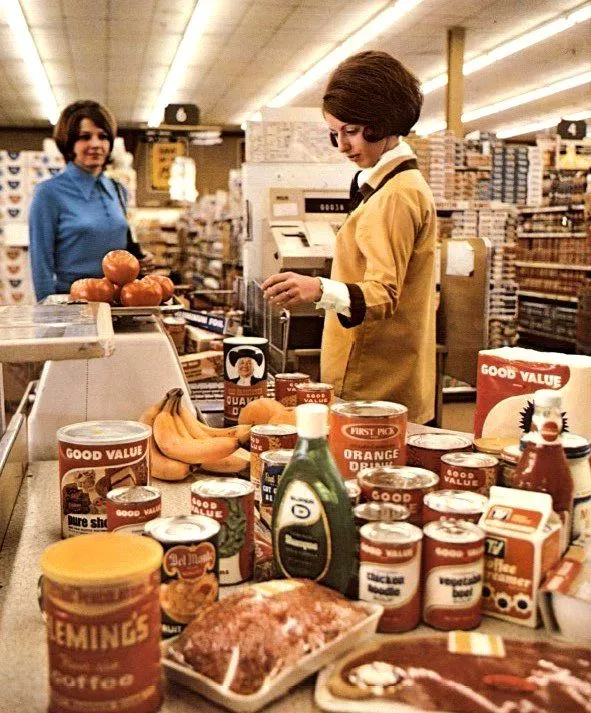
Photo: customer returning item at retail store counter 1970s vintage, via i.pinimg.com
Picture this: You bought a blender. It didn't work. You put it back in the box, drove to the store, and handed it to someone at the counter. They said, "No problem," and gave you your money back. That was it. No interrogation. No phone number required. No form to fill out. No manager approval needed for anything over forty dollars.
That used to be a completely normal Tuesday in America.
Today, returning that same blender might require the original receipt, the original packaging, a valid photo ID that gets scanned into a database, the serial number verified against purchase records, and — depending on the retailer — a waiting period before your refund even hits your account. And if you've returned more than a couple of things in the past year, there's a real chance an algorithm has quietly flagged you as a risk.
How did buying something and then giving it back become this complicated?
The Old Way: Trust as the Default Setting
For most of the twentieth century, the return counter was a pretty relaxed place. Department stores like Sears, JCPenney, and the local shop on Main Street operated on a simple principle: the customer was telling the truth. If someone said a shirt didn't fit or a toaster stopped working, you took their word for it. Some stores were famous for this. Nordstrom built an entire brand identity around the idea that they'd take almost anything back, no questions asked. The story — possibly apocryphal, definitely beloved — of them accepting a set of tires they never even sold became retail legend.
The underlying logic made sense. Most people aren't fraudsters. The cost of occasionally accepting a bad-faith return was far less than the cost of insulting a loyal customer by treating them like a thief. Goodwill had real monetary value, and merchants understood that.
Returns were also just simpler to process. Cash was king. The transaction was reversed. Done.
The Shift: When Retailers Started Doing the Math
Something changed in the 1990s and accelerated sharply through the 2000s. Retail got bigger, margins got thinner, and the rise of big-box stores meant that the person behind the return counter no longer knew your name or your face. Anonymity cuts both ways — it made it easier for dishonest shoppers to abuse the system, and it made it easier for retailers to justify treating every customer with suspicion.
"Return fraud" became a genuine industry concern. Wardrobing — buying an outfit for a single event and returning it after — cost retailers real money. So did "receipt fraud," where people would find discarded receipts and use them to return merchandise they never actually purchased. By the mid-2000s, the National Retail Federation was publishing annual reports on return fraud losses running into the tens of billions of dollars.
Retailers responded by building walls.
Return windows shrank. Fifteen to thirty days became standard where sixty or ninety once felt normal. Restocking fees appeared, especially on electronics. Receipts became mandatory. Then came the ID scanning — companies like The Retail Equation quietly began building customer return profiles, tracking how often individuals returned items and assigning them risk scores. You might be denied a return not because of anything you did wrong, but because the system decided your history looked suspicious.
The Hidden Cost Nobody Talks About
Here's the frustrating part: all of this surveillance infrastructure was designed to catch a relatively small percentage of bad actors. Studies have consistently shown that the vast majority of returns are legitimate — products that genuinely didn't work, sizes that genuinely didn't fit, gifts that genuinely weren't wanted.
But the systems don't know that. They treat the honest customer and the fraudulent one with the same baseline suspicion and put the burden of proof on the person who just spent money in the store.
The emotional toll is real, even if it's hard to quantify. There's something demoralizing about being made to feel like a suspect when you're just trying to return a pair of pants that were too short. The implicit message from the retailer — one of the biggest in the country, with billions in annual revenue — is that they don't trust you until you prove otherwise.
And then there are the fees. Return shipping costs on online orders have become a stealth revenue stream for retailers. What was once free is now often $6.99 or more, deducted straight from your refund. Some retailers have moved to "keep it" policies for low-value items, which sounds generous until you realize it's actually cheaper for them than processing the return — and it still doesn't get you a hassle-free experience on anything worth real money.
The Amazon Effect and Its Contradictions
To be fair, the story isn't entirely bleak. Amazon's rise pushed many retailers to compete on return convenience, and for a while, that was genuinely good for consumers. Free returns, extended windows, drop-off locations everywhere — the friction came way down.
But even Amazon has tightened things up. Accounts with high return rates have been quietly closed. Third-party sellers have their own restrictive policies. And the ease of online returns created its own new problem: return rates for e-commerce clothing hover around 30 to 40 percent, compared to roughly 8 to 10 percent for in-store purchases. That math doesn't work forever, and retailers know it.
The result is an industry constantly recalibrating — loosening policies to win customers, tightening them when the losses mount, and the ordinary shopper caught in the middle of someone else's financial equation.
What Got Lost in the Transaction
The old return culture wasn't just about convenience. It was about a relationship between a store and its community. When the hardware store downtown accepted a return without a fuss, it was reinforcing something: we know you, we trust you, we want you to come back. That's a fundamentally different dynamic than a corporate algorithm deciding your return score puts you in a yellow-flag category.
Nobody is suggesting retailers should absorb unlimited fraud. That's not realistic. But somewhere between "we'll take your word for it" and "your ID will be scanned and your return history logged in a national database," there was a middle ground that didn't require treating every customer like a potential criminal.
We blew past that middle ground a long time ago. And most of us barely noticed until we were standing at a return counter, receipt in hand, being told the window closed yesterday.