The Place Where Any Kid Could Be the Smartest in the Room: What We're Losing as Libraries Fade
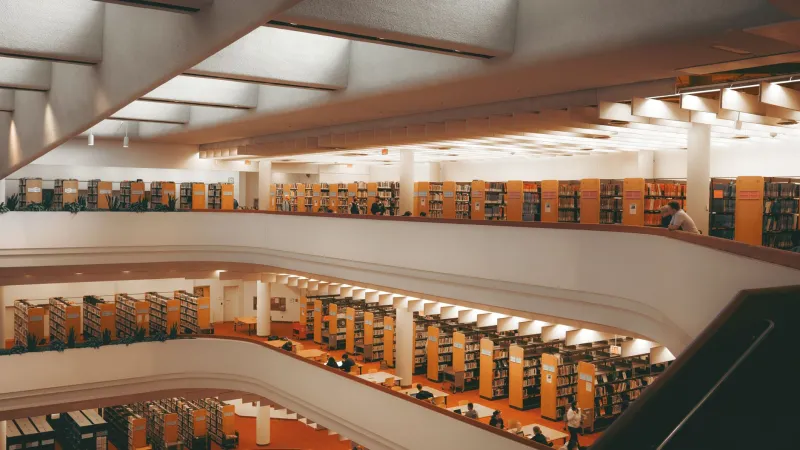
The Most Democratic Building in Town
There was a time in America when the library card was the most powerful thing a ten-year-old could own.
It didn't matter if your parents rented or owned, if your dad worked a factory line or ran the bank, if your house had encyclopedias on the shelf or nothing but a TV Guide. The moment you walked through those heavy double doors, you had access to the same books, the same maps, the same knowledge as absolutely anyone else in town. In a country that has always wrestled with inequality, the public library was one of the few places that actually delivered on the promise of equal opportunity.
In the mid-20th century, the American public library wasn't just a place to borrow books. It was the community's information infrastructure — the Google, the Wikipedia, the streaming service, and the community center all rolled into one. You went there to research school projects, to find a recipe, to understand your legal rights, to read the newspaper from a city three states away. Librarians weren't just custodians of shelves. They were skilled navigators who could help you find almost anything if you just told them what you were looking for.
For millions of working-class kids, the library was where ambition got its first real foothold.
Saturday Mornings at the Card Catalog
If you grew up in America before the internet, you probably remember the particular smell of a public library — that mix of old paper, wood polish, and something ineffably quiet. You remember the card catalog, those long rows of small wooden drawers filled with typed index cards, each one a tiny breadcrumb leading you toward something you wanted to know.
Finding information required effort. You had to learn the Dewey Decimal System. You had to ask for help. You had to physically walk the stacks and run your finger along the spines until you found what you needed. And when you did find it — when you pulled that book from the shelf and cracked it open — there was a kind of satisfaction that came from the hunt itself.
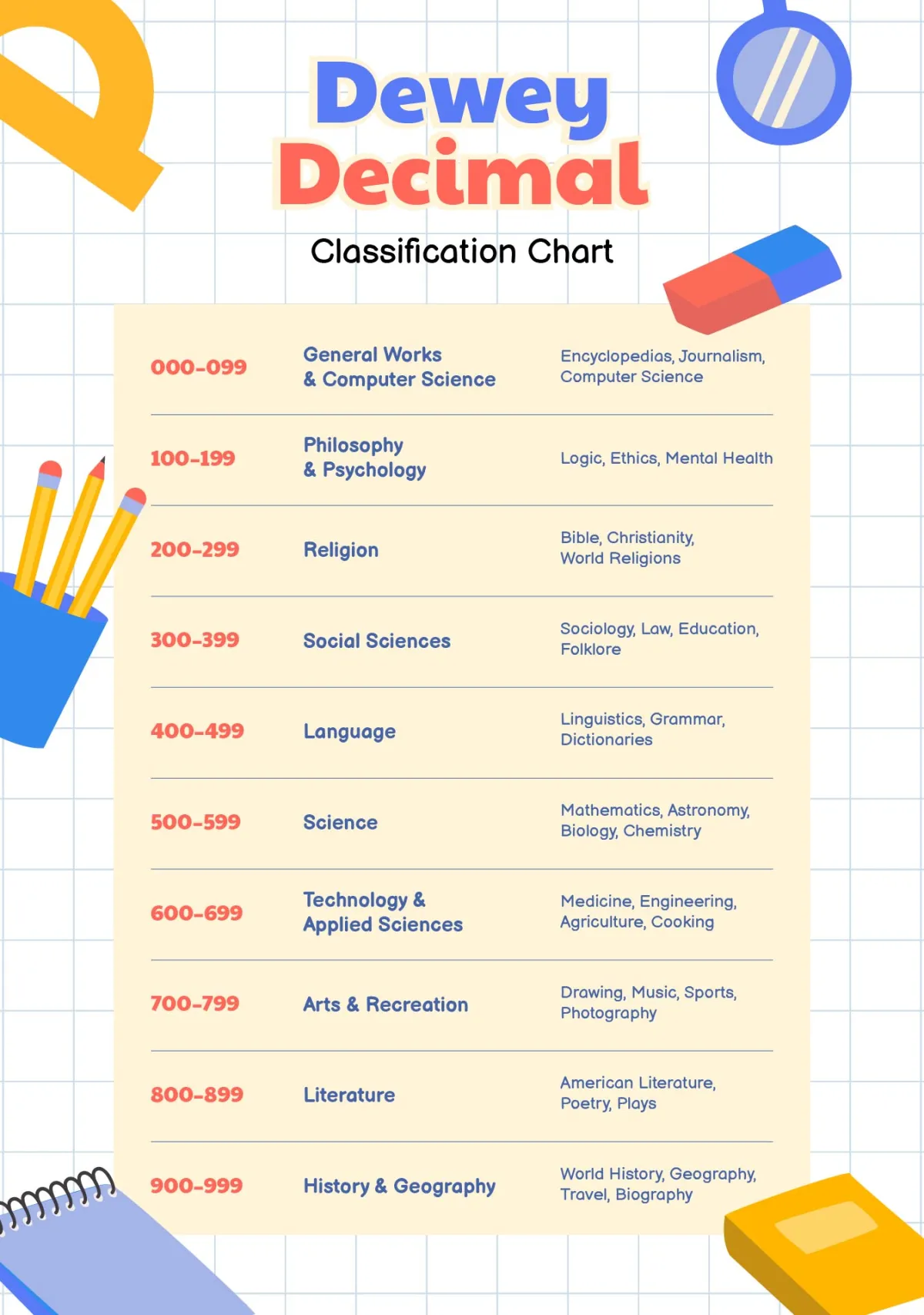 Photo: Dewey Decimal System, via www.printablee.com
Libraries were also loud in the best possible way. Not with noise, but with activity. Story hours drew crowds of small children on weekday mornings. Teenagers sprawled at long tables doing homework. Retirees settled into armchairs with newspapers. Immigrants practiced English with the help of language tapes. The library served everyone because it had to. That was the whole point.
At their peak in the postwar decades, American public libraries were genuine civic institutions — as essential to a town's identity as its fire station or its post office.
When the Internet Arrived, Everything Changed
The digital revolution didn't kill the library overnight. It was more of a slow erosion.
First came the internet, which made basic information retrieval something you could do from your kitchen table. Then came smartphones, which put that capability in your pocket. Then came e-books, audiobooks, streaming services, and YouTube tutorials for everything from fixing a leaky faucet to learning calculus. Suddenly, the core function that libraries had served for a century — connecting people to information — was available to anyone with a decent Wi-Fi connection.
Library foot traffic began declining in the 2000s and has largely continued on that trajectory. According to data from the Institute of Museum and Library Services, per-capita library visits in the US dropped significantly between 2004 and the early 2020s. Budget cuts followed. Branches closed. Hours were reduced. Librarian positions were eliminated.
 Photo: Institute of Museum and Library Services, via mma.prnewswire.com
And yet — and this is where it gets complicated — library usage by some measures has never been higher. Digital checkouts of e-books have surged. Libraries now offer online databases, streaming services, digital newspapers, and remote research assistance. Many libraries have reinvented themselves as community hubs offering job training, 3D printers, seed libraries, social services referrals, and safe spaces for people experiencing homelessness.
The library didn't disappear. It transformed. But that transformation has come with real costs.
What the Numbers Don't Show
Here's what gets lost in the debate about whether libraries are still relevant: the library was never just about books.
It was about the experience of being in a shared public space dedicated to learning. It was about the librarian who remembered what you checked out last time and had a suggestion ready. It was about the kid from a household with no books at home sitting next to the kid from a household with a full library — both of them, in that moment, equally equipped.
Today, the digital divide means that access to information is still profoundly unequal, just in new ways. Not everyone has fast home internet. Not everyone has a device. Not everyone knows how to evaluate whether the information they're finding online is credible. The library — when it's properly funded and staffed — still addresses all of those gaps in ways that an algorithm simply cannot.
But here's the uncomfortable financial reality: public libraries are funded primarily through local property taxes and municipal budgets, which means libraries in wealthier communities tend to be well-resourced while libraries in lower-income areas — the very communities that need them most — are often the ones facing the steepest cuts.
The great equalizer is becoming unequal.
The Thing We Risk Forgetting
There's a reason Andrew Carnegie spent the equivalent of billions of today's dollars building public libraries across America in the late 19th and early 20th centuries. He understood that a functioning democracy required an informed citizenry, and that an informed citizenry required access to information regardless of economic status.
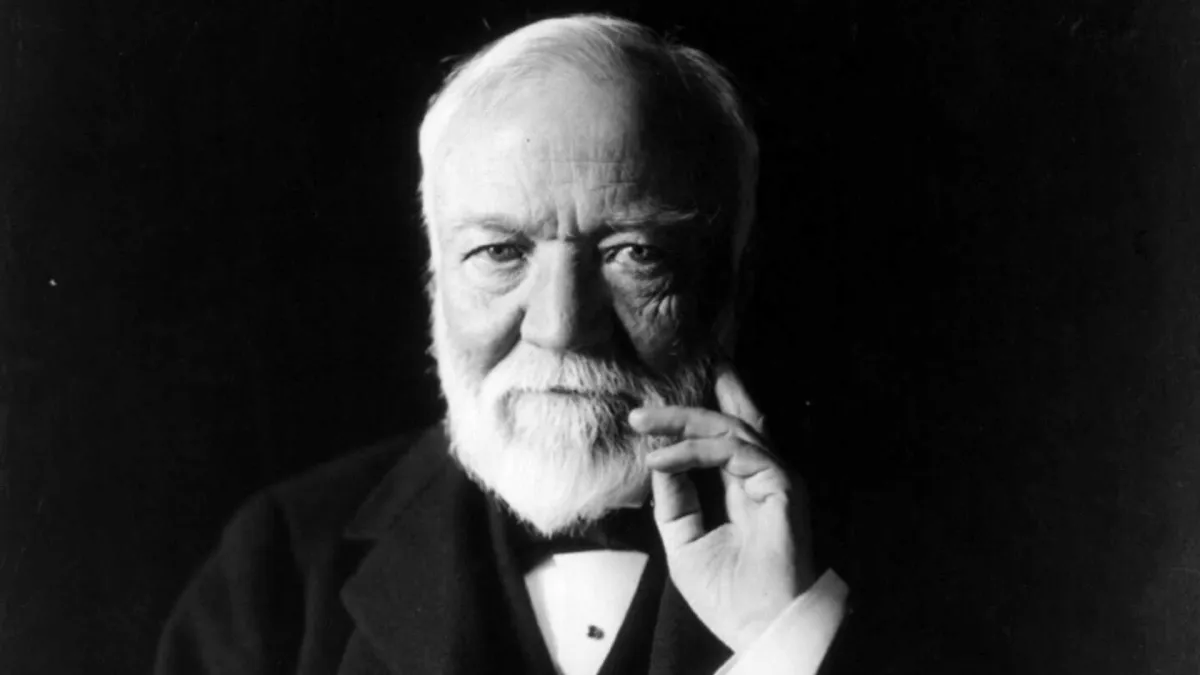 Photo: Andrew Carnegie, via res.cloudinary.com
The library card was free. That was the whole point.
In a media environment where misinformation spreads faster than facts, where information increasingly flows through private platforms optimized for engagement rather than accuracy, where the ability to evaluate sources is a skill that not everyone is taught — the public library's role as a trusted, neutral, professionally curated information resource feels more necessary than ever.
Whether it can survive the budget pressures, the changing habits, and the public's fading sense of what it's actually for — that's the question American communities are quietly answering right now, one closed branch at a time.
The library card used to be your passport to everything. The question is whether enough people still care to keep that passport valid.