The Sick Day Used to Be Sacred. Then We Decided Suffering Loudly Was More Professional.
Picture a Tuesday morning in 1974. A man wakes up with a fever, a sore throat, and the general sense that his body has staged a small rebellion. He picks up the kitchen phone, dials his supervisor, says he's not feeling well and won't be in, and hangs up. He spends the day in bed. His wife brings him soup. He watches game shows. By Thursday, he's back at work.
Nobody sent him a follow-up call. Nobody asked for documentation. Nobody cc'd HR. His coworkers covered what needed covering, because that's what coworkers did. The understanding was mutual and unspoken: sometimes people get sick, and when they do, they stay home.
That version of the sick day is not entirely extinct. But it's on the endangered list.
When a Phone Call Was Enough
The postwar American workplace operated on a baseline of professional trust that is genuinely difficult to reconstruct in the present context. Employees were largely judged on their output over time, not their moment-to-moment availability. A worker who missed a day with a cold was not viewed as a potential malingerer requiring surveillance — they were a person with a cold.
Sick leave policies at mid-century were often informal by today's standards. Many workplaces ran on an honor system. You took a sick day when you were sick, you didn't abuse the privilege, and the implicit social contract held. In unionized industries — which covered a much larger share of American workers in the 1960s and 70s than they do today — sick days were codified in contracts, and using them was understood as a right rather than a favor.
The cultural message was also different. Showing up sick was considered inconsiderate, even reckless. You were spreading illness to colleagues. You were performing at reduced capacity. Staying home wasn't weakness — it was basic professional courtesy.
How the Calculus Changed
Several forces converged over the following decades to complicate what had been a simple transaction between a sick person and their employer.
The decline of union membership removed the contractual protections that had made sick leave predictable and secure. As job stability eroded through the 1980s and 1990s, the fear of being seen as dispensable grew. Taking a sick day stopped feeling like a right and started feeling like a risk.
Then came email. Then smartphones. Then Slack, Teams, and the full architecture of always-on workplace communication. The physical act of being absent from the office became, for many workers, only partial. You might be home with the flu, but your inbox didn't know that. Your phone didn't care. The expectation that you were, at minimum, reachable — even on a sick day — crept into workplaces so gradually that most people barely registered it happening.
Remote work, which expanded dramatically after 2020, added a new layer of complexity. If you work from home anyway, the logic goes, surely you can send a few emails. Surely you can join the 10 AM call. You're already at your desk — the sick day becomes a negotiation rather than a declaration.
The Performance of Illness
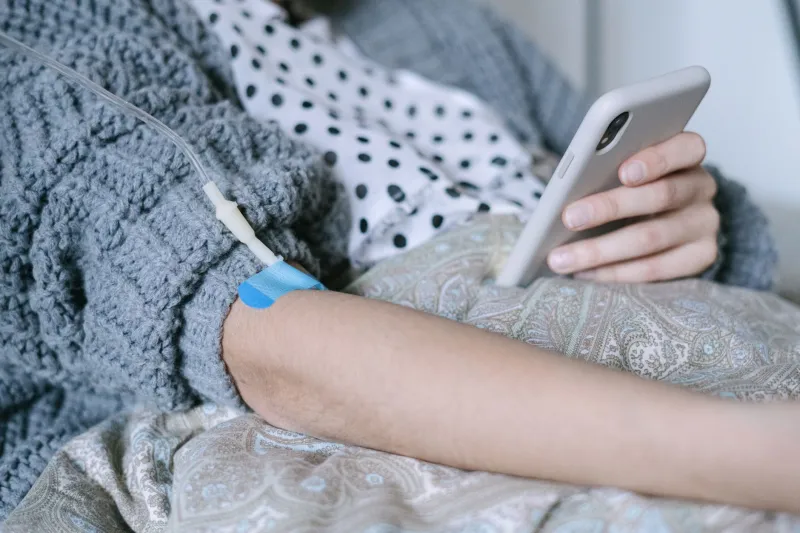
There's a specific modern ritual that would have baffled a worker from 1965: the apologetic sick-day announcement. You've seen it, maybe written it yourself. The Slack message that begins "So sorry to do this" and ends with "I'll try to check messages when I'm feeling up to it." The email assuring your team that you'll be monitoring your inbox. The calendar block that says "OOO — sick" but is accompanied by a string of replies sent from bed, just to prove you haven't fully abandoned the enterprise.
This is the performance of being sick while also performing the act of not being sick. It is exhausting in a way that compounds the original exhaustion of the illness.
A 2023 survey by the American Psychological Association found that more than half of American workers reported working while sick at least occasionally, and nearly a quarter said they did so regularly. The reasons they gave were telling: fear of falling behind, concern about how it would look, and in some cases, the simple fact that there was no one to cover their work. The sick day, in other words, had become a luxury that many workers felt they couldn't afford.
The Cost Nobody Calculates
Public health researchers have a term for the phenomenon of working while ill: presenteeism. And the evidence suggests it's expensive in ways that go beyond the individual. Sick employees working in close quarters spread illness to colleagues. Sick employees working remotely produce lower-quality work. The productivity loss from presenteeism has been estimated, in various studies, to exceed the productivity loss from absenteeism — meaning that pushing through illness actually costs employers more than letting workers rest.
And yet the cultural incentive structure runs in the opposite direction. The worker who powers through a fever gets quietly coded as dedicated. The worker who stays home gets quietly coded as someone to watch.
What Was Actually Lost
The simple sick day was, in retrospect, a small but meaningful expression of a social contract. It said: we recognize that you are a human being with a body that occasionally fails you, and when that happens, we will hold your place until you're better. It asked for honesty and offered trust in return.
What replaced it isn't a single thing. It's a combination of economic precarity, communication technology, and a cultural shift toward measuring professional worth in visibility rather than output. The result is a workforce that is, in some ways, more connected and more productive than ever — and also more exhausted, more anxious, and more likely to be sending emails with a temperature of 102.
Somewhere between the kitchen phone call and the apologetic Slack message, the sick day stopped being a recovery tool and became a guilt event. And American workers — and their immune systems — have been paying for that shift ever since.