The One Good Suit: When Getting Dressed Was an Act of Respect
The Suit That Lasted Twenty Years
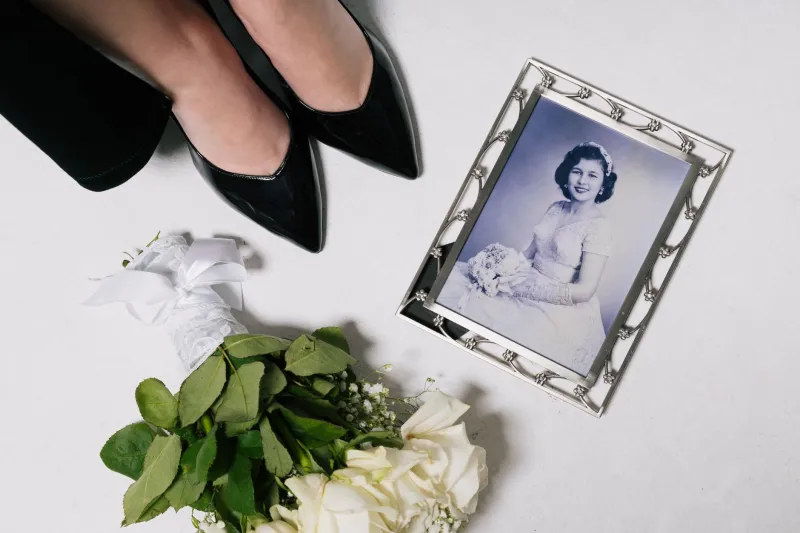
Somewhere in a box of old family photographs, millions of Americans have a picture of a grandfather or great-uncle standing outside a church or a courthouse or a modest backyard in a dark wool suit. The suit fits well. It looks pressed. The shoes are shined. The tie is straight.
Here's the thing: that suit probably cost two weeks' wages. It was bought for a wedding or a funeral, worn for every significant occasion in between, and eventually passed down or buried with the man who owned it. It wasn't a fashion statement. It was the most serious thing that person owned — a physical expression of the idea that some moments in life deserve to be honored, and that how you present yourself is a form of respect for the people around you.
That idea has almost completely vanished from American life. And the way it disappeared tells you something interesting about who we've become.
When Clothing Meant Something
For most of the 20th century, Americans dressed in a way that was governed by clear, widely understood codes. Men wore hats. Women wore gloves to certain occasions. You dressed up for church, for travel, for a job interview, for a night out, for a visit to a doctor's office. Children were put in their best clothes for school photos. Teenagers wore their cleanest jeans — not their most distressed ones — when meeting a date's parents.
None of this was about wealth. Working-class families understood these codes just as well as upper-class families, and often took them more seriously. When you don't have much, what you wear signals that you value the occasion enough to make an effort. A factory worker in his Sunday best was making a statement about his dignity that had nothing to do with his bank account.
Department stores in mid-century America were built around this reality. The men's suit section was a serious place. Salesmen measured you carefully, knew their fabrics, and understood that you were making a significant investment. Alterations were included because the suit was meant to last. You weren't buying an outfit. You were buying something closer to a piece of furniture.
The Long Road to Sweatpants
The casualization of American dress didn't happen all at once. It came in waves.
The 1960s cracked the formal dress code wide open, as youth culture deliberately rejected the buttoned-up aesthetic of their parents. The 1970s brought polyester and a general loosening of standards. The 1980s introduced the concept of "business casual" into the American workplace — a term that, once introduced, began expanding like a gas to fill whatever space it was given.
By the 1990s, Silicon Valley had made the deliberate rejection of formal dress into a kind of status symbol. Wearing a hoodie to a billion-dollar meeting was a power move. Casual Friday became casual every day. And then — somewhere in the 2000s and 2010s — athleisure arrived and completed the transformation. Leggings became acceptable everywhere. Sneakers went from the gym to the boardroom. The line between what you wore to work out and what you wore to work essentially disappeared.
 Photo: Silicon Valley, via cdn.getyourguide.com
The pandemic finished the job. When half the country spent a year on Zoom calls from the waist up, formal dress lost whatever lingering social enforcement it still had. Why own a blazer if nobody's going to see it?
Fast Fashion and the Death of Investment Dressing
The economics of clothing changed everything too. In 1960, the average American household spent about 10 percent of its income on clothing — and bought relatively few pieces that were expected to last. Today, that figure has dropped to around 3 percent, but Americans buy far more clothes than ever before, largely because fast fashion has made individual garments extraordinarily cheap.
The result is a strange paradox: we spend less on clothes but own more of them, and we value individual pieces far less. A shirt that costs $12 from an online retailer is not something you take to the tailor when the seam splits. You throw it away and buy another one. The repair relationship — the emotional connection between a person and a garment they've invested in — has been severed by economics.
When clothing is cheap and disposable, the psychology around it shifts. You stop thinking of getting dressed as a considered act and start thinking of it as a logistical one. You're not asking "what does this outfit say about how I feel about this occasion?" You're asking "what's clean?"
What Dressing Up Actually Did for Us
This is where it gets a little counterintuitive, because there's genuine research suggesting that what we wear affects how we think and feel — not just how others perceive us.
Psychologists call it "enclothed cognition." Studies have found that wearing more formal or intentional clothing can increase abstract thinking, focus, and a sense of authority. Getting dressed with care, the research suggests, primes your brain for the kind of serious engagement that the outfit signals.
There's also something worth considering about what dress codes did for social cohesion. When everyone shows up to a wedding or a job interview or a funeral in roughly the same register of formality, it creates a shared language. It communicates that we all agree this moment matters. The collapse of that shared language — the moment when anything goes anywhere — isn't just an aesthetic change. It's a statement about how we relate to each other and to the occasions that structure our lives.
None of this means America needs to go back to girdles and fedoras. Comfort matters. Self-expression matters. And rigid dress codes have historically been used to exclude and police in ways that weren't neutral.
But the grandfather in that photograph — the one in the twenty-year suit, standing straight, shoes shined — understood something that's worth holding onto. Getting dressed with intention is a way of saying: this moment is worth my effort. You are worth my effort.
We traded that idea for athleisure. Whether the trade was worth it is a question worth sitting with.