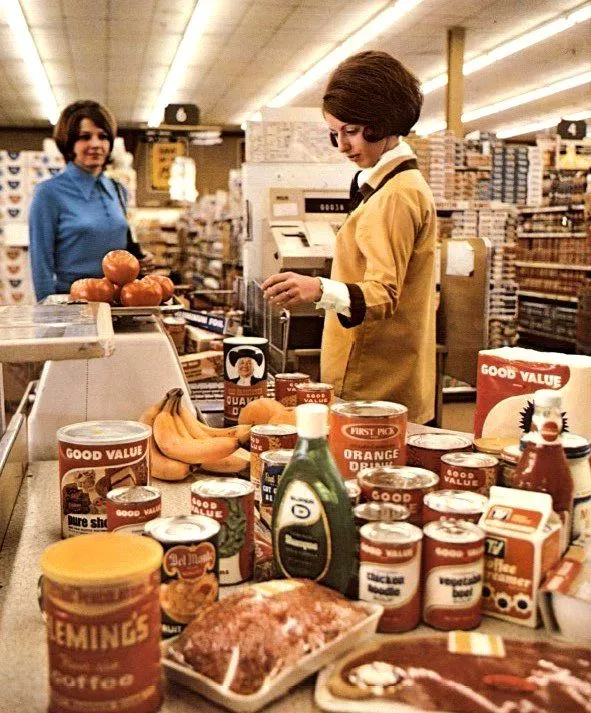
The Little Book That Kept America Honest With Itself: Whatever Happened to Knowing Your Balance?
There was a ritual to it. You'd walk into the bank — not drive through, not log in — actually walk in, take a number, and wait your turn on a wooden bench that had probably been there since Eisenhower. When you finally reached the teller, you'd slide your passbook across the counter. She'd feed it into a machine that printed your latest transactions in neat rows of black type. You'd walk out knowing, with absolute certainty, exactly how much money you had.
That little book was more than a record. It was a mirror.
What the Passbook Actually Did
The savings passbook was standard issue for most American bank customers from the early 20th century well into the 1980s. It was a physical ledger — typically three by five inches, sometimes smaller — that tracked every deposit and withdrawal in chronological order. Banks updated it in real time when you visited a branch. Some families kept theirs in fireproof lockboxes alongside birth certificates and property deeds. It was that important.
Checking accounts came with something similar: the check register. A small booklet tucked inside your checkbook where you manually logged every transaction. You wrote down the date, the payee, the amount, and the running balance. Every single time. Miss one entry and the whole thing fell apart, which meant you paid attention. You had to.
This wasn't just paperwork. It was a financial education delivered one transaction at a time. When you wrote down that you'd spent $23 at the grocery store and watched your balance drop from $312 to $289, that subtraction meant something. It had weight. You felt it.
The Monthly Statement as Event
Once a month, an envelope arrived in the mailbox. Inside was your bank statement — a full accounting of everything that had moved through your account. Families sat down with it. Some spread it on the kitchen table and reconciled it line by line against their check register, hunting for discrepancies with the seriousness of an IRS audit.
This was not considered tedious. Or rather, it was, but it was the kind of tedious that kept you honest. If your register didn't match the bank's numbers, you figured out why. You found the error — yours or theirs — and you corrected it. You knew your money the way you knew your own handwriting.
Banks reinforced this culture. Tellers knew their customers. A branch manager in a mid-sized American town in 1965 could probably tell you the approximate balances of half the accounts in the building. That wasn't creepy — it was community. When old Mr. Patterson came in to make a withdrawal that seemed out of character, someone might quietly ask if everything was alright.
When the Machine Took Over
ATMs arrived in the 1970s, spread through the 1980s, and by the 1990s had fundamentally changed the relationship between Americans and their money. You no longer needed to go inside. You no longer needed to talk to anyone. You just needed your card and your PIN.
Online banking followed in the late 1990s and early 2000s, and with it came the death of the reconciliation ritual. Why balance your checkbook when you could just refresh the page? Why maintain a register when the bank's app would show you everything?
The problem is that "showing you everything" and "helping you understand everything" are two completely different things.
The Invisible Account
Ask someone today what their checking account balance is. Not approximately — exactly. Most people will reach for their phone. A significant number won't know within fifty dollars. Some won't know within a few hundred. This isn't because people are irresponsible. It's because the entire system has been designed to make that knowledge unnecessary.
Automatic payments pull money out on dates you may or may not remember. Pending transactions sit in a gray zone between "spent" and "cleared" that the app renders in a font too small to worry about. Overdraft protection — marketed as a feature — means you can spend money you don't have without the immediate consequence of a declined card. The friction is gone. So is the awareness.
Algorithms now manage what tellers and check registers used to manage. They flag suspicious activity, calculate interest, process direct deposits, and send you a push notification if something looks off. It's efficient. It's also completely invisible. Most Americans interact with their finances the way they interact with electricity — they just assume it's working until something goes wrong.
What That Friction Was Actually Worth
The deliberate slowness of passbook banking wasn't a design flaw. It was, in retrospect, a feature. The act of writing down a transaction made you think about it. The act of reconciling your statement made you accountable. The act of walking into a bank and talking to a human being made your finances feel real in a way that a glowing rectangle simply doesn't replicate.
Financial literacy in America has been declining for years, and the reasons are complicated. But it's worth asking whether we gave something up when we made money management frictionless. Whether the ease of modern banking has quietly made us worse at the thing banking is supposed to help us do — which is understand, manage, and grow what we have.
Your great-grandmother's passbook is probably in a box somewhere. Faded ink, a few rubber-band marks, entries going back decades. Every deposit she ever made. Every withdrawal. Her whole financial life in neat rows.
She knew exactly where she stood. Do you?