The Return Counter Used to Be a Handshake. Now It's a Background Check.

Walk into most major retailers today with an item you want to return and here's what happens: the associate scans the item, asks for your receipt, requests a photo ID, scans that too, enters it into a system that runs your return history against a national database, and then — if the algorithm approves — processes your refund. The whole thing takes four minutes and feels vaguely like being screened at an airport.
Now compare that to what happened at the hardware store on Main Street in 1974, when your father brought back a drill bit that snapped on the second use. He walked in, set it on the counter, said "this broke," and the owner handed him a new one. That was it. No ID. No receipt. No database. Just two people who knew each other operating on the assumption that neither one was trying to cheat the other.
Something significant happened between then and now, and it's worth understanding what.
When Returns Were a Community Contract
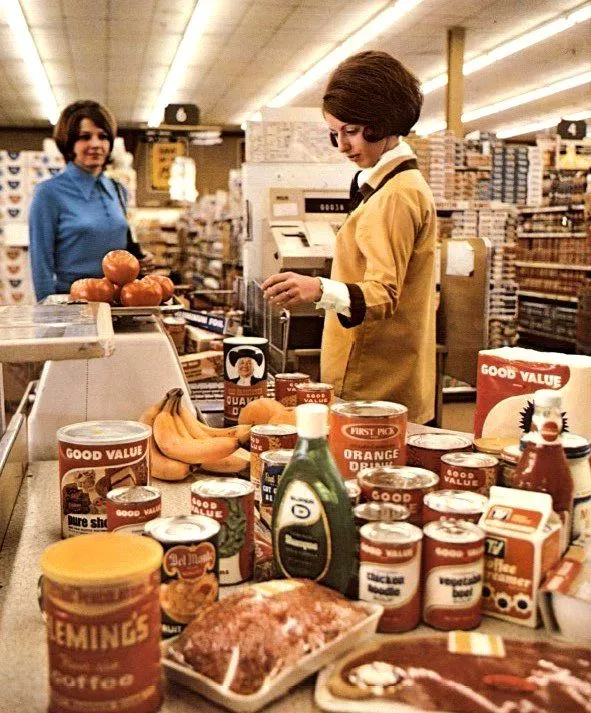
The small-town retailer of mid-20th century America operated on relationship capital. Your hardware store owner knew your name. Your pharmacist knew your family. The woman who ran the dress shop knew which of her regular customers had a wedding coming up and which ones had just gone through a rough patch and might need something marked down without being asked.
In that context, a generous return policy wasn't a corporate strategy — it was common sense. If Mrs. Henderson brought back a blouse she'd bought three weeks ago because the seam was coming apart, you took it back. Not because your employee handbook said to, but because Mrs. Henderson had been shopping there for fifteen years and would continue to for fifteen more, and because everyone in town would know within a week how you'd handled it.
The cost of absorbing an occasional return was simply the cost of maintaining trust. And trust, in a community-based retail economy, was the only currency that really mattered.
Sears, for decades one of the most trusted retailers in America, built its reputation partly on a return policy so generous it bordered on unconditional. The Sears guarantee was a point of genuine pride — you bought something from the catalog, it didn't work, you sent it back. No argument. No asterisk. That policy built a level of consumer confidence that turned Sears into a household institution for most of the 20th century.
What Changed, and Why
The shift didn't happen overnight, and it wasn't driven by any single event. A few forces converged to turn the return counter from a handshake into a screening process.
First, retail scaled up. When you're running a chain of 800 stores serving tens of millions of customers, the relationship model breaks down. The associate at register seven doesn't know you. She has no way to assess whether you're a loyal customer of fifteen years or someone who just bought a television specifically to watch the Super Bowl and return it on Monday morning — a practice that became common enough to earn its own name: "wardrobing" or "return fraud."
And return fraud did become a real problem. The National Retail Federation has estimated that fraudulent returns cost American retailers billions of dollars annually. Worn clothing returned as new. Merchandise bought at a discount and returned for full price with a different receipt. Items stolen from one store and returned at another for store credit. The abuses were real, creative, and widespread enough that retailers couldn't simply absorb them as a cost of goodwill.
So they built systems. Return windows tightened. Receipt requirements hardened. Restocking fees appeared. And eventually, companies like The Retail Equation began offering retailers a service that tracks individual consumers' return behavior across multiple stores and flags those who return "too much" — a score you can't see, calculated by an algorithm, that determines whether your return gets approved today.
The Customer Who Became a Suspect
There's a phrase that started appearing in retail policy documents sometime in the 1990s: "return abuse." The framing is revealing. Where once a return was a normal part of commerce — a correction, a reconsideration, a quality issue resolved — it became something that could be abused. The customer, by implication, was someone to be monitored.
This wasn't entirely unfair. Some customers did abuse the system. But the response — treating every return as a potential fraud until proven otherwise — fundamentally changed the nature of the transaction. You walked in as a person and were processed as a data point.
Small retailers who tried to maintain the old model often got burned. A generous return policy in an era of algorithmic retail arbitrage is an invitation to exploitation. People figured out the gaps and took advantage of them. The trust that the old system ran on required everyone to participate in it honestly. Once enough people stopped, the system couldn't hold.
What We Actually Lost
It's tempting to frame this as a simple story of consumer cynicism destroying a wholesome tradition. But the reality is more complicated and a little sadder than that.
What we lost wasn't just a convenient return policy. We lost a model of commerce that assumed good faith between strangers. The hardware store owner who handed over a replacement drill bit without a receipt wasn't naive — he was operating in a world where reputation, community, and mutual accountability kept most people honest most of the time. The transaction worked because both parties had something at stake beyond the immediate exchange.
Modern retail, for all its efficiency, has largely eliminated that mutual stake. The customer has no relationship with the store. The store has no relationship with the customer. What's left is a transaction managed by policy and enforced by algorithm.
Some smaller retailers are quietly trying to reclaim the old model — independent shops that know their regulars, that operate on trust, that will take something back because they want you to come back. It works, in the way it always worked, when everyone involved treats the other person like a neighbor rather than a liability.
Most of us shop somewhere that scans our ID first and asks questions later. We've accepted that this is how it works now.
It didn't always.