The Soda Fountain Where Everyone Knew Your Name: America's Lost Community Center
The Heart of Main Street America
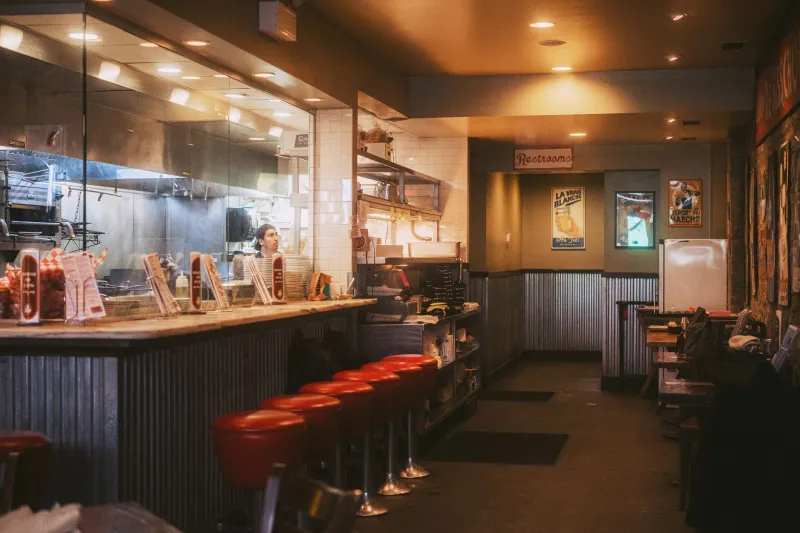
Walk into any CVS or Walgreens today, and you'll find aisles of products, self-checkout kiosks, and maybe a pharmacy counter where someone might acknowledge your existence with a polite nod. But from the 1890s through the 1960s, the neighborhood drugstore looked completely different. Right there in the front, gleaming under pendant lights, sat a marble-topped soda fountain with swivel stools and a soda jerk in a paper hat who knew your usual order.
These weren't just places to grab a quick drink. They were the beating heart of American social life.
Where Teenagers Fell in Love and Grandparents Held Court
The drugstore soda fountain operated on a completely different social logic than anything we have today. It was simultaneously a restaurant, a social club, a dating venue, and a community bulletin board. Teenagers would slide into red vinyl booths to share a milkshake with two straws. Business deals got hammered out over coffee and apple pie. Local gossip spread faster than melted ice cream on a July afternoon.
Unlike today's coffee shops, where laptops create invisible barriers and earbuds signal "don't disturb," the soda fountain actively encouraged interaction. The long counter meant you sat shoulder-to-shoulder with strangers who quickly became neighbors. The soda jerk wasn't just making drinks—he was orchestrating conversations, introducing customers to each other, and keeping track of who was dating whom.
The Economics of Community
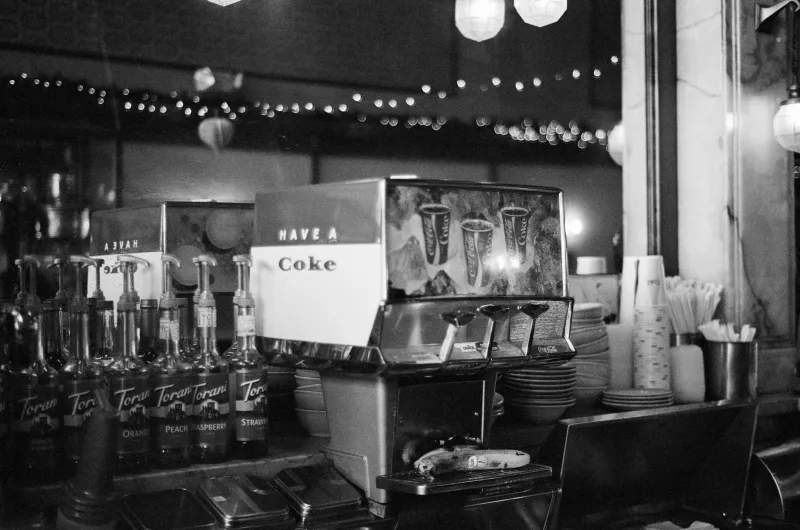
What made these spaces work wasn't just nostalgia—it was economics. A typical soda fountain could stay profitable serving nickel Cokes and fifteen-cent banana splits because the overhead was shared with the pharmacy. The druggist didn't need the soda fountain to be a goldmine; it just needed to draw people into the store and create customer loyalty.
This economic model created something remarkable: a genuinely accessible third space. You could nurse a Coke for an hour without anyone pressuring you to leave. Kids could pool their allowances for a shared sundae. Adults could linger over coffee and pie without feeling guilty about taking up a table.
Compare that to today's coffee culture, where a basic latte costs what a full meal used to cost, and many shops actively discourage lingering with time limits and uncomfortable seating.
The Menu That Built Relationships
The soda fountain menu reads like a foreign language now: phosphates, egg creams, malted milks, ice cream sodas with flavored syrups. But these weren't just drinks—they were conversation starters. Ordering a "brown cow" (chocolate milk with chocolate ice cream) or a "black and white" (chocolate syrup and vanilla ice cream) marked you as someone who knew the local lingo.
The soda jerk was part bartender, part therapist, part entertainment director. He knew that Mrs. Johnson always ordered a cherry phosphate when she was worried about her husband's health. He remembered that the high school football team celebrated victories with hot fudge sundaes. This wasn't customer service—it was community care.
What Killed the Fountain
Several forces conspired to empty those red vinyl stools. Suburban sprawl scattered neighborhoods, making the walkable corner drugstore obsolete. Chain pharmacies prioritized efficiency over atmosphere. Air conditioning made hanging out indoors less appealing when you could stay cool at home. Fast food offered quicker, cheaper alternatives.
But the real killer was cultural. As Americans became more mobile and less rooted in specific neighborhoods, the idea of having a "regular spot" where everyone knew your name started to feel quaint rather than comforting. We traded the intimacy of being known for the freedom of being anonymous.
The Digital Substitution That Never Quite Worked
Today's social media promises connection, but it can't replicate what happened at those marble counters. Online, we curate our interactions, choosing who to engage with and when. At the soda fountain, you were stuck with whoever happened to be there—and that randomness created genuine community.
Modern coffee shops try to fill the gap, but they're missing crucial elements. They're often too expensive for regular use, too noisy for real conversation, and too transient to build lasting relationships. The barista might know your drink order, but they don't know your life story.
What We Lost When the Fountains Ran Dry
The disappearance of the soda fountain represents more than just changing retail trends. It marks the moment when American communities stopped having a shared living room. These spaces created what sociologists call "weak ties"—casual relationships with people outside your immediate family and close friends. These connections turn out to be crucial for everything from finding jobs to maintaining mental health.
Research consistently shows that communities with more "third spaces"—places that aren't home or work—have higher levels of civic engagement, lower crime rates, and better public health outcomes. The soda fountain was America's original third space, and we've never quite figured out how to replace it.
The Search for a New Fountain
Some communities are trying to recreate what we lost. Independent pharmacies with old-fashioned soda fountains are making a comeback in small towns. Community centers and libraries are designing spaces that encourage lingering and conversation. Neighborhood bars are positioning themselves as modern gathering spots.
But none of these efforts quite capture the magic of the original. The drugstore soda fountain worked because it was simultaneously ordinary and special, accessible and memorable, functional and social. It was where America learned to be neighborly, one cherry Coke at a time.
Until we find a way to rebuild those kinds of spaces—places where community happens naturally, not as a scheduled activity—we'll keep wondering why modern life feels so disconnected, even when we're more "connected" than ever before.