When Kids Actually Got Bored: The Lost Art of Doing Nothing All Summer
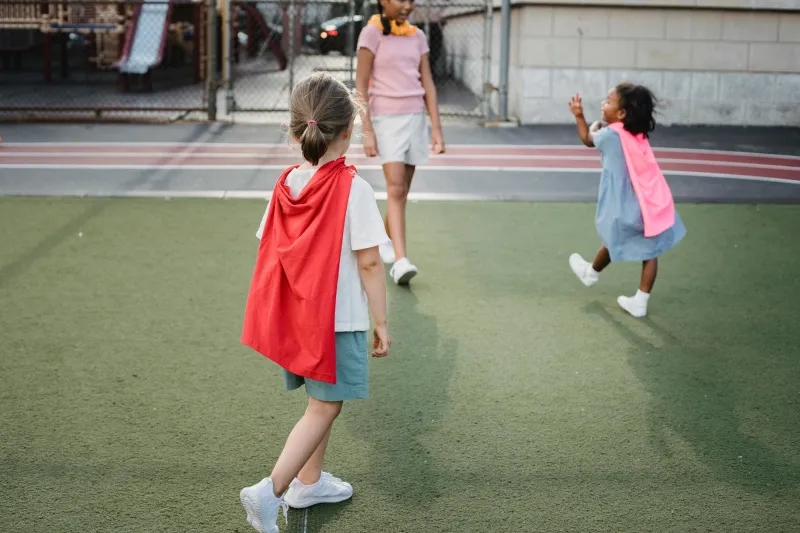
The Summer That Lasted Forever
Remember being a kid and complaining "I'm bored" only to have your mom suggest you "go find something to do"? That seemingly unhelpful response was actually brilliant parenting, backed by decades of child development research we're only now beginning to understand.
For most of American history, summer meant three months of blissful nothing. Kids woke up when they wanted, wandered the neighborhood until dinner, and filled endless hours with whatever struck their fancy. No schedules. No structured activities. No enrichment goals.
Just time.
The Boredom Revolution
By the 1980s, American parents started viewing unstructured time as wasted time. Summer camps multiplied. Academic programs promised to prevent "summer slide." Sports leagues expanded into year-round commitments. The idea that kids might spend an afternoon staring at clouds became not just wasteful, but potentially harmful to their future success.
Today's typical middle-class American child experiences summer as a carefully orchestrated series of activities designed to build skills, expand horizons, and pad college applications. A recent survey found that 84% of American children have structured activities planned for at least six hours of every summer day.
The irony? All that structure might be preventing kids from developing the very skills parents most want them to have.
What Boredom Actually Builds
Neuroscientists have discovered that boredom triggers what they call the "default mode network"—the brain state responsible for creativity, self-reflection, and complex problem-solving. When kids complain they have "nothing to do," their brains are actually preparing to do some of their most important work.
Dr. Teresa Belton, who studies creativity at the University of East Anglia, found that people who experienced substantial boredom as children scored significantly higher on creativity tests as adults. "Boredom is crucial," she explains. "It allows the mind to engage in what we call 'divergent thinking'—the ability to generate novel ideas and solutions."
Those long, empty summer afternoons weren't just killing time. They were teaching kids to:
- Generate their own entertainment
- Tolerate discomfort without immediate gratification
- Develop internal motivation
- Practice sustained attention
- Learn from trial and error without adult intervention
The Lost Skills of Summer
Talk to any American over 50 about their childhood summers, and you'll hear stories that sound almost foreign to modern parents. Kids who built elaborate forts from scrap lumber. Children who organized neighborhood-wide games of kick the can that lasted for weeks. Teenagers who spent entire days at the local swimming hole without any adult supervision.
These weren't just fun activities—they were masterclasses in skills that no structured program can teach:
Negotiation and Conflict Resolution: When you're stuck with the same group of neighborhood kids all summer, you learn to work out disputes, compromise on rules, and include everyone in games. No adult referees meant kids had to develop their own sense of fairness.
Risk Assessment: Climbing trees, riding bikes without helmets, and exploring construction sites taught kids to evaluate danger for themselves. They learned the difference between reasonable risks and stupid ones through experience, not lectures.
Initiative and Leadership: Without adults organizing activities, kids had to come up with their own ideas and convince others to participate. The kid who could invent a new game or suggest an adventure became a natural leader.
The Anxiety of Overscheduling
Modern American children report anxiety levels that would have qualified as clinical disorders in previous generations. Part of this stems from never learning to be comfortable with uncertainty or unstimulated time.
When every moment is planned, kids never develop what psychologists call "distress tolerance"—the ability to sit with uncomfortable feelings without immediately seeking relief. They become dependent on external stimulation and struggle with the kind of quiet reflection that builds emotional resilience.
Dr. Peter Gray, a research professor at Boston College, argues that the decline in unstructured play time directly correlates with rising rates of childhood anxiety and depression. "Children need time to process their experiences, to work through problems at their own pace, and to develop their own coping strategies," he explains.
 Photo: Boston College, via all-maps.com
The Economics of Busy
The shift toward structured summers wasn't just about changing parenting philosophies—it reflected economic realities. As more families needed two working parents, summer became a childcare challenge rather than a developmental opportunity.
Summer camps and programs solved the immediate problem of where kids would spend their days, but they created a new expectation that children's time should always be productive and supervised. The idea that kids might simply exist without constant improvement became not just impractical, but irresponsible.
This economic pressure created what sociologists call "concerted cultivation"—the middle-class approach to parenting that treats childhood as a series of skill-building opportunities rather than a distinct life phase with its own value.
What We're Teaching Instead
Today's structured summers teach important skills: teamwork, discipline, specific competencies. But they also teach some unintended lessons:
- That boredom is a problem to be solved immediately
- That fun requires organization and equipment
- That free time is wasted time
- That adults should manage children's experiences
- That success comes from external validation rather than internal satisfaction
These lessons serve kids well in our achievement-oriented culture, but they may be creating adults who struggle with creativity, self-direction, and genuine contentment.
The Paradox of Productive Childhood
The most productive thing a child can do might be nothing at all. Those seemingly empty hours teach skills that no camp counselor can provide: how to entertain yourself, how to find wonder in ordinary things, how to be comfortable in your own company.
Research consistently shows that children who experience substantial unstructured time develop stronger executive function, better emotional regulation, and more innovative thinking. They're also more likely to become adults who can find satisfaction in simple pleasures rather than constantly seeking the next stimulating experience.
Reclaiming the Art of Nothing
Some American families are starting to rebel against the cult of constant activity. They're designating "boredom hours" when kids aren't allowed to use screens or ask for organized activities. They're choosing neighborhoods over programs, backyard exploration over enrichment camps.
It's not easy. Kids accustomed to constant stimulation often struggle with unstructured time initially. Parents worry they're failing their children by not maximizing every opportunity. Communities sometimes lack the safe, walkable spaces that made unsupervised exploration possible in previous generations.
But the research is clear: the best gift we can give kids might be the gift of time—empty, unproductive, gloriously boring time to figure out who they are when no one is watching, organizing, or improving them.
The summer that lasts forever isn't just a childhood memory. It's a developmental necessity we've accidentally scheduled out of existence.