The Birthday Cake That Took All Day to Make—And Why That Actually Mattered
The Recipe Card Worth More Than Gold
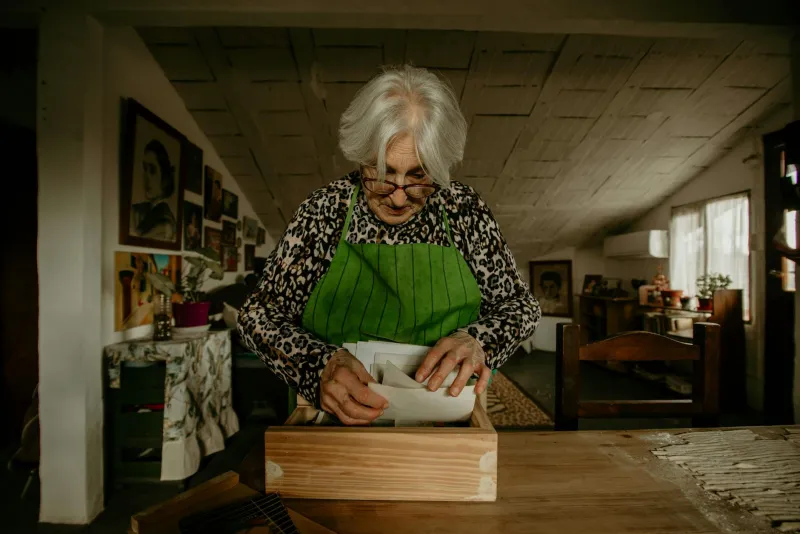
In 1955, when your grandmother decided to make a birthday cake, she didn't grab her phone or fire up a laptop. She reached for a wooden recipe box, its corners worn smooth from decades of use, and pulled out a handwritten card that had been passed down from her own mother.
The chocolate cake recipe was written in careful cursive, with notes scribbled in the margins: "Add extra vanilla," "Don't overbake," "Best with buttermilk." These weren't just instructions—they were family history, encoded in measurements and techniques that couldn't be googled or downloaded.
Making that cake was an all-day affair, and everyone knew it. The birthday child would wake up to the sound of the electric mixer and the smell of butter creaming with sugar. By evening, they'd have a slightly lopsided, imperfectly frosted masterpiece that represented hours of love, effort, and anticipation.
When Convenience Meant Planning Three Days Ahead
Baking from scratch in mid-century America required military-level logistics. You couldn't just decide on Monday that you needed a cake for Tuesday. The process started days earlier, with a trip to the grocery store for ingredients that weren't always available year-round.
Real vanilla extract cost a small fortune. Unsweetened chocolate came in solid blocks that had to be melted carefully in a double boiler. Eggs were cracked one by one, with the constant fear that a broken yolk would ruin the entire batch. Butter had to be left out overnight to soften, and if you forgot, you were either starting over or trying to cream rock-hard butter with a wooden spoon and sheer determination.
The frosting was its own adventure. Before electric mixers became common, making buttercream meant twenty minutes of hand-beating egg whites to stiff peaks. Food coloring came in four basic shades, so every birthday cake was either white, pink, yellow, or a muddy attempt at chocolate brown.
The Kitchen Chemistry That Connected Generations
What made these cakes special wasn't just the taste—it was the process. Children learned to separate eggs by watching their mothers' careful technique. They discovered that cream of tartar wasn't a condiment and that baking powder and baking soda weren't interchangeable, no matter how similar they looked.
The kitchen became a classroom where family recipes were passed down not through screenshots or saved links, but through muscle memory and shared experience. You learned to tell when cake batter was properly mixed not by following a timer, but by recognizing the sound it made against the bowl.
Mistakes were part of the education. Cakes fell, frosting curdled, and decorating attempts looked more like abstract art than the roses they were supposed to represent. But these failures became family stories, retold every year when the recipe box came out again.
The App That Replaced Affection
Today's birthday cake arrives in 30 minutes, custom-decorated and Instagram-ready. The DoorDash driver hands over a professional creation that would have taken a 1950s baker an entire day to produce. It's perfect, convenient, and completely disconnected from the person celebrating.
We've gained efficiency and lost ritual. Modern parents can order a cake while stuck in traffic, choosing from hundreds of designs and flavors that would have been unimaginable to previous generations. Gluten-free, vegan, sugar-free, with edible photo prints and LED candles that play Happy Birthday in twelve languages.
But somewhere in that convenience, we lost the anticipation. The birthday child no longer wakes up to the sound of mixing bowls and the smell of vanilla. They don't hover around the kitchen, hoping to lick the spoon or sneak a fingerful of frosting. The cake appears, gets photographed, and disappears, leaving no memory beyond the social media post.
The Economics of Love
In 1960, the ingredients for a homemade birthday cake cost about $1.50—roughly equivalent to $15 today. But the real cost was time: six hours of active work, from creaming butter to the final decorative flourish. That time investment was the point.
Today's custom cake costs $50-100 and requires zero time investment from the family. We've made birthday cakes more expensive and less meaningful, a perfect metaphor for how convenience culture has transformed American family traditions.
The irony is that we now spend more money to avoid the very experiences that made birthdays memorable. The effort wasn't a bug in the system—it was the feature.
What We Gained and What We Lost
Modern birthday cakes are undeniably better in technical terms. They're more consistent, more visually striking, and accommodate dietary restrictions that would have baffled earlier generations. A child with celiac disease can now have a birthday cake that looks and tastes just like everyone else's.
But we've also lost something harder to quantify: the ritual of creation, the passing down of family knowledge, and the simple satisfaction of making something beautiful with your own hands. The homemade cake was never just about the cake—it was about the making, the anticipating, and the shared experience of celebrating someone you loved.
In our rush toward convenience, we've optimized away the very inefficiencies that made birthdays feel special. The question isn't whether we can get a better cake faster—it's whether getting a better cake faster is actually better at all.
Your grandmother's lopsided chocolate cake, with its uneven frosting and slightly dry edges, represented something that can't be delivered in 30 minutes: the irreplaceable gift of someone's time, attention, and love, measured out in cups and teaspoons and mixed together with care.