The Sweater That Lasted Twenty Years: When a Wardrobe Was Built to Endure, Not Expire
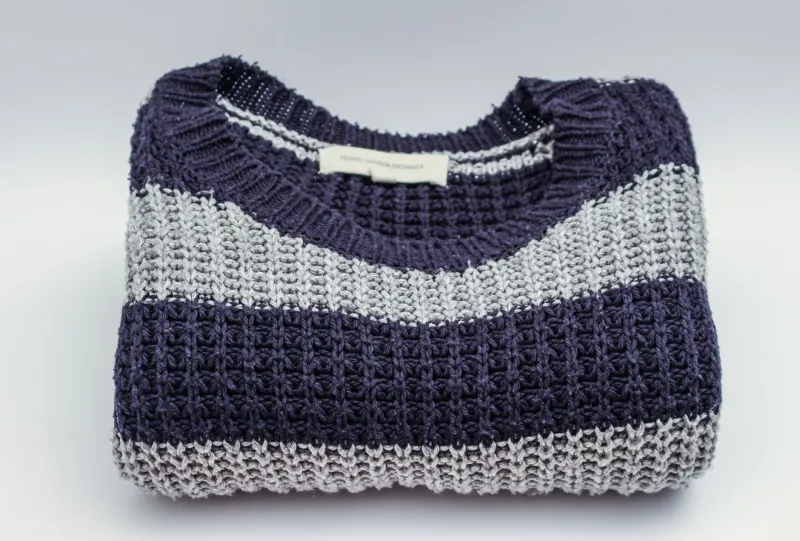
There's a photograph somewhere in most American family albums — the kind taken at Thanksgiving or Easter — where your grandfather is wearing the exact same cardigan he wore in the photo from five years earlier. And the one before that. It wasn't that he couldn't afford a new one. It was that the old one still worked perfectly fine, and buying a replacement for something that still functioned would have struck him as vaguely irresponsible.
That logic feels almost foreign now. The average American today buys around 65 to 70 new garments per year, according to industry research — more than one piece of clothing per week. We throw away roughly 81 pounds of textiles annually per person. And most of what we buy is never expected to last more than a season or two before it pills, fades, or simply falls out of fashion.
Something fundamental changed between your grandfather's cardigan and today's $12 fast-fashion pullover. And tracing that change reveals a lot about how consumer culture quietly rewired the way Americans think about ownership, quality, and value.
The Old Wardrobe Logic
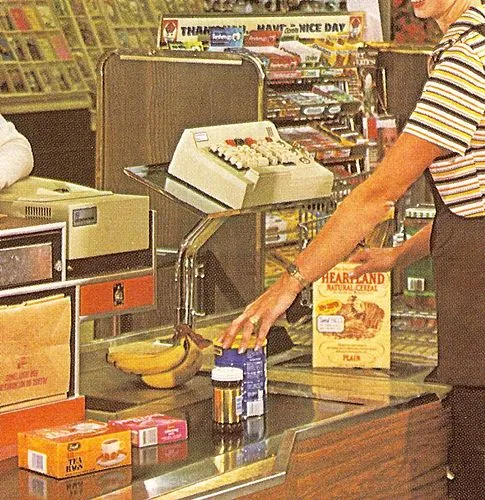
For most of American history, clothing was expensive relative to income, and it was treated accordingly. A working-class family in the 1940s or 1950s might have a weekly clothing budget measured in a few dollars — and that money was spent carefully on items expected to last for years. Garments were constructed with durability in mind: heavier fabrics, reinforced seams, buttons that were actually sewn on with enough thread to stay attached.
The concept of a "capsule wardrobe" — though nobody called it that — was simply how most people lived. A few good work shirts. A dress or two for church and occasions. One decent coat. Shoes that got resoled rather than replaced. The wardrobe was a collection of investments, not a rotating inventory.
Mending was a basic household skill. Mothers taught daughters to darn socks and let out hems. Fabric stores sold patches. A worn collar or elbow didn't mean the garment was finished — it meant it was time to sit down with a needle and thread for an hour. The idea of discarding a shirt because it had a loose button would have seemed almost comically wasteful.
How the Industry Changed the Rules
The shift began in earnest in the 1960s and accelerated dramatically through the 1980s and 1990s. A few forces converged to transform clothing from a durable good into a semi-disposable one.
First, manufacturing moved offshore. As production shifted to lower-wage countries — initially Japan and Hong Kong, later Bangladesh, Vietnam, and Cambodia — the cost of producing a garment dropped sharply. Clothing that would have cost a significant fraction of a week's wages in 1955 could now be produced for a fraction of that. Retail prices fell, and with them, the psychological weight of any individual purchase.
Second, synthetic fabrics proliferated. Polyester, nylon, and acrylic blends were cheaper to produce than wool or quality cotton, and they enabled faster manufacturing. They also, not coincidentally, tended to wear out more quickly — which, from a retailer's perspective, wasn't necessarily a problem.
Third, and perhaps most importantly, the fashion industry discovered the power of planned obsolescence. By accelerating trend cycles — from roughly two seasons per year to four, and eventually to the 52-week "micro-seasons" of fast fashion — retailers created a system in which clothing became psychologically outdated long before it was physically worn out. You didn't need a new coat because yours had fallen apart. You needed a new coat because yours looked like last year.
The Fast Fashion Acceleration
When Zara pioneered its rapid-turnaround model in the 1980s and 1990s — getting new designs from concept to store shelf in as little as two weeks — it changed the competitive landscape for the entire industry. H&M, Forever 21, and eventually an endless wave of direct-to-consumer online brands followed the same playbook: high volume, low prices, constant newness.
By the 2010s, ultra-fast fashion platforms like Shein were producing thousands of new styles per week. The business model depends entirely on the consumer never feeling settled — always slightly behind, always needing to catch up to a trend that was already being replaced.
The environmental consequences are staggering. The fashion industry is estimated to account for roughly 10 percent of global carbon emissions annually — more than aviation and shipping combined. The average garment is worn approximately seven times before it's discarded. Synthetic fabrics, which now make up about 60 percent of all clothing produced, shed microplastics with every wash and take hundreds of years to decompose in landfill.
The Psychological Cost
Beyond the environmental toll, there's something subtler that fast fashion has done to the way Americans relate to their belongings. When nothing is built to last, nothing quite feels worth caring for. The attachment that previous generations felt toward a well-made coat — the kind of object that got better with age and carried the memory of years of use — becomes impossible to form with a $15 blouse that starts unraveling after three washes.
Consumer researchers have a term for this: the endowment effect. We value things more when we've had them longer, when we've maintained them, when they carry personal history. Fast fashion systematically prevents that bond from forming. Which means it also systematically prevents the satisfaction of ownership — and replaces it with the temporary hit of novelty, which requires constant refreshing.
The Quiet Comeback
Something interesting is happening at the edges of the market, though. Secondhand clothing platforms like ThredUp, Poshmark, and The RealReal have grown dramatically, and the resale market is projected to outpace fast fashion within the next decade. A younger generation of shoppers, increasingly aware of the environmental math, is rediscovering the logic of buying less and buying better.
There's even a word for it now — "slow fashion" — as if the idea of buying a sweater you intend to own for ten years required its own movement and branding to feel legitimate.
Your grandfather just called it common sense. The sweater was fine. Why would you need another one?