Your Word Used to Be Good Enough: The Vanishing Era of the No-Questions-Asked Return

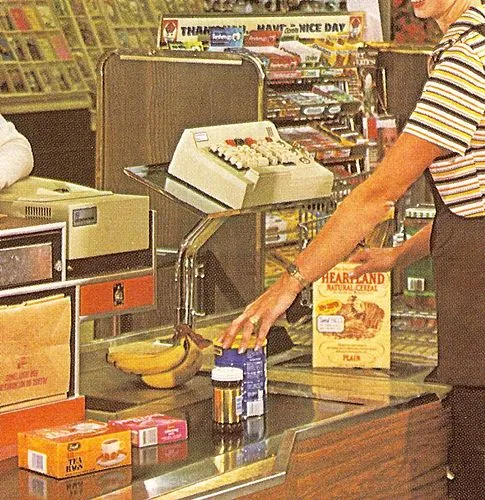
Picture this: It's 1974. You bought a toaster at the local department store three weeks ago. It stopped working. You wrap it back up, tuck it under your arm, walk up to the customer service counter, and tell the woman behind it that the thing just quit on you. She nods, opens the register, and hands you your money. No receipt. No questions. No form to fill out.
That was retail in America for most of the twentieth century. And by today's standards, it sounds almost unbelievably naive.
When Stores Actually Trusted You
The return policies of mid-century American retail were built on a simple premise: the customer was probably telling the truth. Stores like Nordstrom, Sears, and Montgomery Ward became legendary for their generosity. Nordstrom, in particular, developed a near-mythological reputation — there are stories, possibly apocryphal but widely repeated, of the company accepting returns on items it didn't even sell. The point wasn't the item. The point was the relationship.
Local department stores and family-owned shops operated the same way. The store manager knew your face, maybe your name. If you said something was defective, that was good enough. The transaction was built on mutual trust, and for a long time, that trust mostly held.
This wasn't just good manners — it was good business. A customer who felt respected came back. A customer who felt interrogated did not. In an era before chain stores dominated every strip mall and before online reviews could sink a business overnight, reputation was built one transaction at a time.
The Cracks Started Showing
By the 1980s and into the 1990s, something shifted. Retail had scaled up dramatically. The neighborhood store gave way to the big-box retailer. The manager who knew your name was replaced by a part-time associate following a corporate handbook. And as stores grew larger and more anonymous, so did the opportunities for abuse.
"Wardrobing" — the practice of buying clothing, wearing it once to an event, and returning it — became a recognized problem with an actual name. Return fraud, which includes everything from returning stolen merchandise to swapping price tags, began costing retailers billions annually. The National Retail Federation has estimated that return fraud costs the industry somewhere in the range of $10 to $15 billion a year in recent decades. Stores that had been operating on goodwill started doing the math and didn't like what they found.
So the policies tightened. Receipts became required. Return windows shrank from "whenever" to 90 days to 30 days to, in some cases, 15 days. Tags had to remain attached. Items had to be in original packaging. And then came the technology.
The Surveillance Layer
Modern retail returns are a minor bureaucratic event. Major chains now use third-party verification systems — companies like The Retail Equation — that track your return history across stores and can flag you as a "high-risk" returner based on an algorithm you never agreed to and can barely appeal. You can be denied a return not because you did anything wrong, but because a piece of software decided your return frequency looks suspicious.
Photo ID is now commonly required just to process a refund. Some retailers photograph the items being returned. Others require the original UPC code, making it impossible to return something if the tag has been removed — even if the item is clearly unused and defective. Restocking fees, once unheard of, are now standard on electronics and furniture. Online purchases add another layer: repackaging requirements, prepaid labels that may or may not actually be free, and the growing trend of "keep it" policies where a refund is issued but the item isn't worth the cost of shipping back.
And if you bought something during a sale? Good luck. The fine print on promotional pricing has become a small legal document.
Who's Really Paying for This?
Here's the uncomfortable part: most people returning things are doing so honestly. A 2023 survey from the NRF found that approximately 13 percent of all returns are fraudulent — which means roughly 87 percent are completely legitimate. But the policies are designed around the minority, and every honest shopper absorbs the inconvenience.
There's a real cost here that doesn't show up on a receipt. Shopping used to feel like a relationship. You gave the store your business; the store stood behind what it sold. The implicit contract was simple. Now it's a transaction conducted between a consumer and a corporation, each one mildly suspicious of the other's motives.
Some retailers have tried to recapture the old spirit. Costco's return policy remains famously generous, and it's not a coincidence that the company also ranks among the highest in customer loyalty. The trust-based model still works — it just requires a level of institutional commitment that most chains aren't willing to sustain.
What We Actually Lost
The shift from open-armed returns to algorithmic gatekeeping isn't just a policy change. It reflects something broader about how American consumer culture evolved. When stores stopped trusting customers, they were responding to real abuse. But in doing so, they also changed the feeling of what it meant to shop somewhere.
There used to be a kind of civic compact at the heart of retail: we sell you something, we stand behind it, you treat us fairly in return. It was imperfect, and some people absolutely took advantage of it. But for most shoppers, it made buying something feel like less of a gamble.
Now the gamble runs both ways. You hope the product works. The store hopes you don't try to return it. And somewhere between those two anxieties, the simple pleasure of buying something without a second thought got a little harder to find.