The Guy Who Cleaned Your Windshield Without Being Asked: Whatever Happened to the Full-Service Gas Station?
There's a generation of Americans who have never experienced a full-service gas station. They've always pumped their own fuel, swiped their own card, and driven away without exchanging a single word with another human being. That's just how it works. That's always been how it works.
Except it hasn't. Not even close.
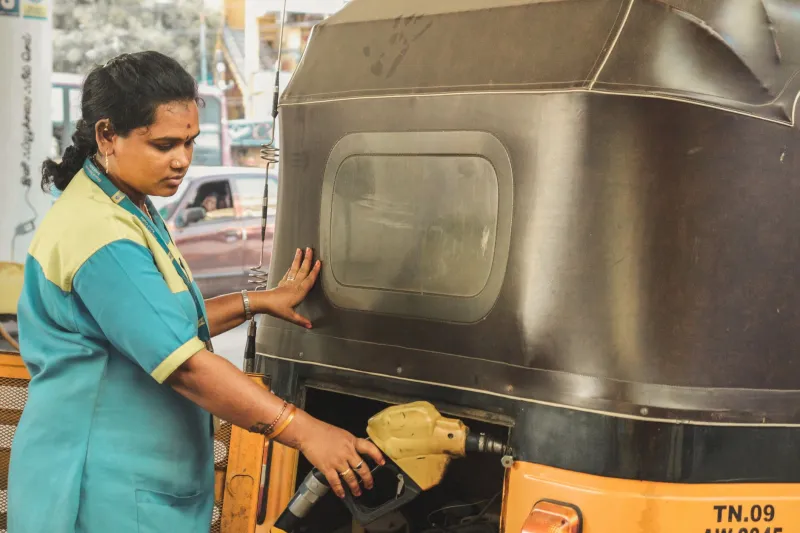
For the better part of the twentieth century, pulling into a gas station was a small but genuine social event. Someone came to your car. They filled your tank, checked your oil, and wiped down your windshield — not because you asked, but because that was the job. You sat in the driver's seat. You rolled down the window. You had a two-minute conversation about the weather or the road ahead. Then you drove off.
It sounds almost quaint now. In 1970, it was just Tuesday.
The Golden Age of the Attendant
The full-service model dominated American gas stations from the 1920s onward. When cars were still novel and mechanical knowledge wasn't widely distributed, having a trained attendant manage the refueling process made practical sense. People didn't necessarily know how to handle gasoline safely, and the station wanted to protect both its customers and its equipment.
But the service went far beyond safety. At a properly run station, an attendant would check your tire pressure without being asked. They'd top off your wiper fluid. They'd pop the hood and eyeball the engine. They knew which cars ran hot and which ones burned through oil. Regulars got remembered — their preferences, their routes, their usual fill-up amount.
For families taking long road trips — the kind that defined American summers in the 1950s and 60s — the gas station attendant was a checkpoint. Someone who could tell you how far it was to the next town, whether the mountain pass was clear, or which diner down the road was worth stopping at.
These weren't glamorous jobs, but they were good ones. Steady hours, regular customers, and a genuine sense of usefulness.
How Self-Service Changed Everything
The shift began in the late 1940s when a few operators in Los Angeles started experimenting with letting customers pump their own gas at reduced prices. It was controversial. Some states moved to ban the practice outright, citing safety concerns. Others embraced it.
The real turning point came in the early 1970s. The 1973 oil embargo sent gas prices surging, and station owners scrambled to cut costs. Self-service pumps were cheaper to operate — no attendant wages, no benefits, no scheduling headaches. Customers, facing higher prices at every fill-up, were increasingly willing to pump their own gas if it meant saving a few cents per gallon.
By the end of the decade, the full-service model was in freefall. Stations that had employed three or four attendants on a shift were down to one cashier behind bulletproof glass. The forecourt — that word that used to mean a place of activity — became a silent row of pump islands where strangers stood a few feet apart and stared at their shoes.
New Jersey Held the Line
Not everywhere gave in. New Jersey is the last state in the country where pumping your own gas is actually illegal. Oregon maintained a similar law for decades before partially relaxing it in 2018, allowing self-service in rural counties.
New Jersey's law dates to 1949 and has survived every attempt to repeal it. Polls consistently show that most Garden State residents prefer keeping it — not out of stubbornness, but because they genuinely value the convenience and the jobs it preserves. On a cold January morning, having someone else stand outside and pump your gas while you sit in a warm car is not a small thing.
Visitors from other states often find it disorienting. They reach for the pump handle out of habit and get waved off by an attendant. The experience — brief, simple, human — tends to leave an impression.
More Than Just Gas
What disappeared with the full-service station wasn't just a labor category. It was a texture of daily life.
The gas station was one of those low-stakes, high-frequency touchpoints that quietly held communities together. You saw the same attendant every week. He knew your car. You knew his name. It wasn't a friendship exactly, but it was a connection — the kind that made a town feel like a place where people knew each other rather than a collection of strangers sharing a zip code.
That kind of incidental human contact — the two-minute exchange that costs nothing and means more than you realize — has been systematically removed from American daily life. The self-checkout replaced the cashier. The app replaced the travel agent. The pump island replaced the attendant. Each individual change seemed reasonable. Taken together, they've quietly hollowed out the social fabric of ordinary days.
The Math We Didn't Do
Self-service gas is undeniably more efficient. You pull in, you pump, you leave. No waiting for an attendant to finish with the car ahead of you. The savings in labor costs have arguably kept prices lower over the long run.
But efficiency isn't the only thing worth measuring. The full-service era created hundreds of thousands of jobs — entry-level positions that didn't require a college degree, that offered predictable hours, and that gave young workers a place to learn customer service, mechanical basics, and the value of showing up on time.
Those jobs are gone. The conversation that happened while your tank filled is gone. The attendant who noticed your tire was looking low before you had a blowout on the highway — gone.
We traded all of that for the privilege of standing in the cold and doing it ourselves. Most of us never even noticed the exchange was happening.